- All
- Product Name
- Product Keyword
- Product Model
- Product Summary
- Product Description
- Multi Field Search
Views: 0 Author: Site Editor Publish Time: 2026-08-19 Origin: Site
Ordering a custom part should not begin with capacitance and voltage alone. Resonant Capacitors work as part of an LC network, so their electrical stress, loss, temperature rise, mechanical integration, and validation plan are connected. A quotation request that omits these conditions can produce a part that looks suitable on a data-sheet line yet performs poorly at the operating point. This guide sets out the information buyers should provide when ordering custom resonance capacitors for power-electronic, industrial, and energy applications, and explains why each item changes the design decision.
Specify the complete operating waveform, not only a nominal voltage and capacitance.
Treat frequency, capacitor RMS current, peak current, ESR, and thermal conditions as a linked set of requirements.
Define the permitted resonant-frequency drift, then request a meaningful resonant capacitor tolerance and temperature behaviour.
Include terminals, mounting, clearance, vibration, cooling, and space constraints early; these are electrical as well as mechanical decisions.
Agree on prototype tests and production acceptance criteria before releasing a custom design.
Before ordering a custom resonant capacitor, specify the circuit topology, resonant frequency, inductance, operating frequency range, and whether the capacitor is used in series or parallel resonance.
The supplier should evaluate the capacitor under the actual operating envelope, not just at a nominal frequency.
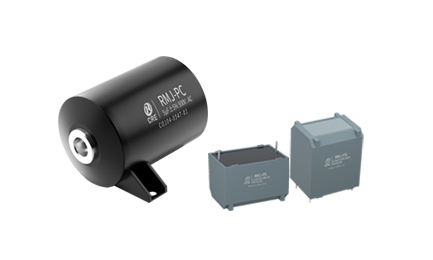
CRE’s resonant capacitor range is intended for high-frequency resonant circuits and includes PP-film designs for high-voltage and high-current power-electronics duties. That is a useful starting category, but it is not a substitute for the application envelope in the buyer’s specification.
List the nominal capacitance in microfarads or nanofarads and say whether it is a single component value or a required bank equivalent. Then define the permitted resonant capacitor tolerance at the measuring conditions that matter: temperature, frequency, and voltage where relevant. A wide tolerance may be acceptable in a forgiving power stage; it may not be acceptable where frequency, gain, heating profile, or impedance matching must stay tightly controlled.
Capacitance changes are not only a production-tolerance question. The buyer should specify the expected ambient range, permitted hot-spot temperature, and required stability over life. If the inverter or converter will be commissioned at one temperature and run continuously at another, the supplier needs to know which state governs tuning. Likewise, if a control loop will compensate for component variation, state the compensation range so the capacitor design is not held to an unnecessary—and costly—limit.
For a capacitor assembly, clarify whether matching between parallel branches matters. A bank can meet the total capacitance requirement while unequal branch values lead to unequal current sharing. Ask how matched groups will be defined and measured if that risk is important. Where series connection is proposed, define the voltage-sharing method and the permissible capacitance spread between units.
The buyer should also separate the required circuit resonant frequency from the capacitor’s own self-resonant frequency. Parasitic inductance changes the component’s impedance at high frequency. A request should therefore state the operating frequency and ask for relevant parasitic information, such as ESL or impedance behaviour, when the design is sensitive to it. Do not assume that a capacitance measured at a low test frequency fully characterizes high-frequency performance.
“800 V” can describe very different duties. It may be a DC level, an AC RMS value, a sinusoidal peak, a pulse amplitude, or a short transient. When ordering custom resonance capacitors, provide the normal and maximum values of each applicable voltage quantity, plus waveform shape and repetition rate. A sinusoidal tank voltage, square-wave excitation, and damped ringing event create different loss and dielectric stresses even when their headline voltage appears similar.
The request should identify DC bias, AC RMS voltage, peak and peak-to-peak voltage, overshoot, polarity reversal where present, and expected surge duration. Include the source of the values: simulation, bench measurement, or a conservative design limit. Measured waveforms are particularly valuable because cable inductance, layout, and switching transitions can create stress that a simplified schematic misses.
Voltage margin should be a design decision, not an unstated assumption. State any derating rule imposed by the end equipment, customer, or internal reliability process. If the operating altitude, pollution environment, spacing rules, or safety isolation requirements affect the part, include them too. They can influence construction, terminals, encapsulation, and clearance.
CRE identifies custom capacitors as a route for adjusting electrical parameters and structural details. To make that flexibility useful, specify the voltage waveform and its limits before asking the supplier to propose a voltage rating. A requested rating without the waveform may be safe but oversized, or compact but insufficiently validated for the real duty.
In a resonant tank, current can be much higher than the input or output current suggests. That is why capacitor RMS current should be a first-class purchase specification. Provide continuous RMS current at the relevant frequency range, maximum overload duration, pulse current, and crest factor. Also state whether the duty is continuous, intermittent, or cyclical, including on/off timing.
Specify RMS current, peak current, operating frequency, ESR, duty cycle, ambient temperature, and cooling conditions together. Capacitor loss can be estimated from I² × ESR, but actual ESR varies with frequency and temperature, so supplier test conditions should always be stated.
Custom resonance capacitors are often defined as much by their construction as by their capacitance. Specify the available installation space—length, width, height, preferred orientation, and keep-out areas—together with mass limitations where relevant. Give the desired terminal type, pitch, direction, thread or busbar interface, torque limits, and the number of terminals. The required creepage and clearance around live parts should be explicit.
The mounting path affects inductance and thermal performance. Short, wide current paths may reduce loop inductance, while longer leads can complicate high-frequency behaviour. If the capacitor must connect close to an inductor or semiconductor module, send a mechanical drawing, photographs, or the relevant CAD envelope. State whether the part will be PCB-mounted, chassis-mounted, clamped, potted, or fitted in a capacitor bank.
Environmental information is equally important: storage and operating temperature, humidity, condensation risk, altitude, dust or contamination, vibration, shock, corrosive atmosphere, and expected service life. For mobile or industrial equipment, describe the vibration profile rather than simply writing “vibration resistant.” A supplier can then judge whether the case, terminal, internal fixation, and mounting arrangement need changes.
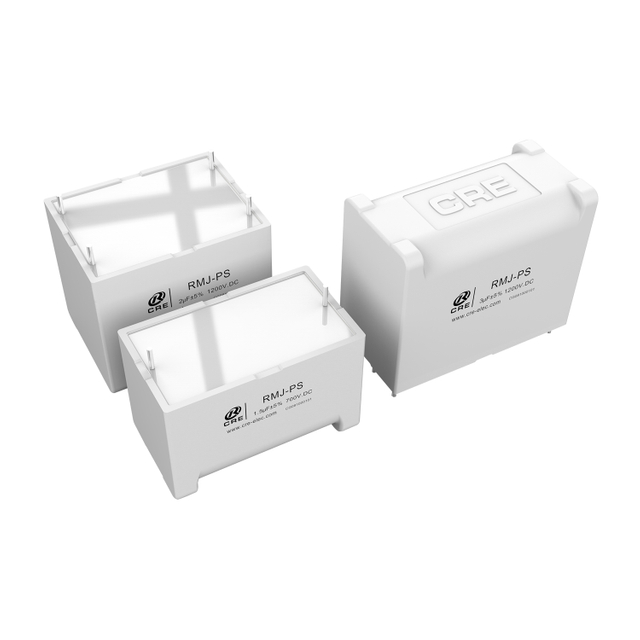
The Resonant Capacitors portfolio includes plastic-box resonance/snubber and high-voltage resonance options. Buyers should use the product family as a reference point and still provide their exact electrical, terminal, and installation constraints. A custom part is most effective when its package is designed with the circuit layout rather than chosen after electrical approval.
Buyers sometimes prescribe a dielectric or internal construction before stating the performance objective. It is better to explain the required stability, loss level, self-healing expectation where applicable, size limit, and application environment, then discuss material options with the supplier. For many power applications, a PP-film construction may be appropriate; a low-ESR, low-loss design can be useful for high-frequency use. The final construction should nevertheless be selected against the complete duty cycle.
Specify applicable standards, customer requirements, restricted-substance rules, traceability expectations, marking needs, and documentation format. Do not claim compliance by analogy: name the exact standard and revision required. If the capacitor is part of safety-relevant, transportation, medical, grid, or export-controlled equipment, state the project requirements at quotation stage so the supplier can confirm scope rather than leaving a gap for late qualification.
Reliability language should be testable. Instead of asking for a “long-life capacitor,” state the required service life, ambient and hot-spot limits, switching duty, electrical stress, and permitted failure or parameter-change criteria. If a scheduled preventive-replacement interval exists, say so. This gives both parties a usable basis for lifetime and qualification discussions.
A custom design should pass through a documented sample stage. Include the required sample quantity, target date, requested data sheets, outline drawings, test reports, labels, and change-control expectations. Identify which values are design targets and which are release limits. If the initial request is incomplete, call it a feasibility specification rather than a production release.
The table below helps turn a broad inquiry into a testable request.
Specification area | What the buyer should provide | What to confirm with the supplier |
|---|---|---|
Circuit function | Topology, L value, series/parallel role, operating modes | Recommended capacitor configuration and any tuning risks |
Electrical stress | Frequency range, C value, AC/DC voltage, RMS/peak current, surge profile | Ratings at stated frequency and waveform; ESR/ESL test conditions |
Thermal duty | Ambient, cooling, enclosure, duty cycle, temperature limit | Predicted or tested temperature rise and current derating |
Mechanical fit | Envelope, terminals, mounting, spacing, torque, layout constraints | Drawing, terminal details, mounting guidance, parasitic considerations |
Environment and compliance | Temperature, humidity, vibration, altitude, standards, life target | Qualification scope, documents, traceability, exclusions |
Validation and supply | Sample quantity, tests, acceptance limits, annual volume, change control | Prototype plan, production test coverage, approval and notification process |
Bench validation should check more than initial capacitance. Measure the resonant frequency and waveform under representative load, calculate or measure temperature rise after thermal equilibrium, inspect current sharing in a bank, and test the highest relevant voltage/frequency condition. Test start-up and abnormal but credible conditions, such as load steps or cooling degradation, when they are part of the equipment risk analysis.
At the approval stage, agree how deviations will be handled. This includes allowable capacitance spread, inspection sampling, part-number control, drawing revision, notification of material or process changes, and requalification triggers. The documented customization process covers requirements analysis, sample development, production checks, and support; a buyer who supplies measurable acceptance criteria can use that process more effectively.
Before sending the RFQ, check that it answers the following questions in one clear document:
What circuit topology and application use the capacitor, and what does it do during each operating mode?
What nominal capacitance, tolerance, resonant-frequency target, and allowed drift are required?
What frequency range, voltage waveform, RMS current, peak current, surge, and overload profile will it experience?
What temperatures, cooling conditions, enclosure limits, vibration, humidity, altitude, and service-life targets apply?
What case size, terminal geometry, mounting method, clearance, and routing constraints must the design meet?
Which standards, documents, samples, tests, production controls, and change notifications are mandatory?
This approach avoids a common procurement mistake: asking manufacturers to quote “equivalent” resonant capacitors when no shared definition of equivalence exists. The lowest unit price is not meaningful if the parts were quoted to different current, thermal, or qualification assumptions. A complete RFQ gives the purchaser a comparable technical basis as well as a commercial one.
The best specification for custom resonance capacitors is a concise description of real operating stress, not a long list of disconnected values. Start with the LC resonant circuit and its frequency range. Add the complete voltage and current waveforms, thermal boundary conditions, desired capacitance stability, mechanical envelope, environmental duty, and an agreed validation plan. That combination lets the manufacturer evaluate loss, temperature rise, construction, and margins as a system. For demanding power-electronic projects, CRE can use those inputs to assess a suitable custom resonant-capacitor configuration instead of forcing a general-purpose part into a specialised duty.
Provide the application, circuit topology, capacitance, frequency range, voltage and current waveforms, thermal conditions, mechanical dimensions, environmental requirements, and validation criteria. CRE can use these parameters to evaluate a customized resonance capacitor solution.
Consider resonant frequency, RMS and peak current, voltage waveform, ESR, temperature rise, and parasitic inductance—not capacitance and voltage alone. CRE’s PP-film resonance capacitors are designed for high-frequency power-electronics applications where low loss and stable electrical performance are important.
Yes. CRE provides customized capacitor solutions covering electrical parameters, package dimensions, terminals, mounting requirements, and application-specific operating conditions. Customers can provide their RFQ specifications or application requirements for technical evaluation.