
- All
- Product Name
- Product Keyword
- Product Model
- Product Summary
- Product Description
- Multi Field Search
Views: 0 Author: Site Editor Publish Time: 2026-03-20 Origin: Site
Capacitors play a critical role in the performance of AC systems, from HVAC units to industrial drives. With various types of capacitors—such as start capacitors, run capacitors, and AC Filter Capacitors—choosing the right one can be a challenge. In this article, we will explore the differences between these capacitors and provide guidance on selecting the right type for your AC system.
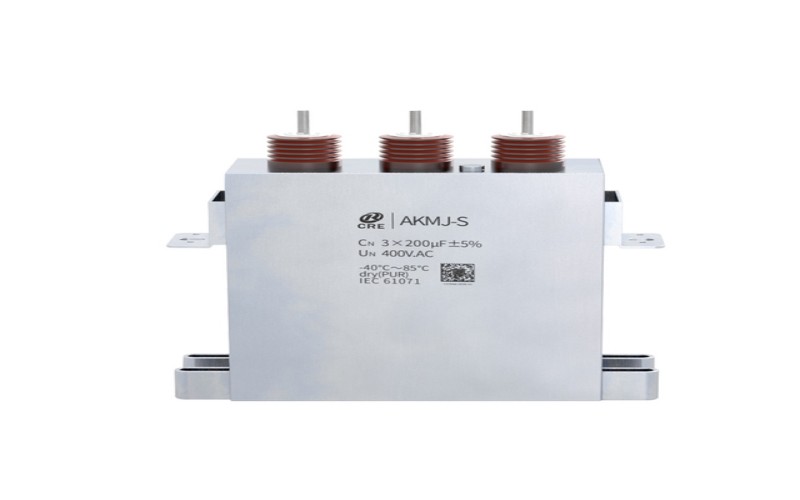
AC Filter Capacitors are integral components in modern power electronics, especially in systems that require smooth and stable electrical performance, such as inverters, UPS systems, and renewable energy systems. Their primary function is to reduce electrical noise and harmonic interference, which can cause instability in electrical systems.
1. Reducing High-Frequency Noise: Power conversion systems like inverters or UPS units typically generate high-frequency noise due to switching operations. This noise can interfere with sensitive components and degrade system performance. AC Filter Capacitors smooth out these unwanted high-frequency currents, allowing for cleaner and more stable electrical signals to pass through.
2. Harmonic Interference Reduction: Harmonics are unwanted frequencies that arise from non-linear loads in electrical circuits. These distortions can reduce the efficiency of power systems and lead to overheating or equipment failure. By filtering these harmonics, AC Filter Capacitors ensure that only the desired frequencies are present in the circuit, improving overall system performance and efficiency.
3. Voltage Stabilization: AC Filter Capacitors play a crucial role in stabilizing voltage across the circuit. They act as energy reservoirs, storing and releasing energy as needed to smooth voltage fluctuations. This is particularly important in systems that rely on constant voltage to operate effectively, such as inverters and photovoltaic systems.
The impact of AC Filter Capacitors on system performance cannot be overstated, particularly in energy-critical environments where reliability and efficiency are paramount. These capacitors ensure that the systems remain stable even under fluctuating load conditions, contributing to enhanced longevity and reliability of the equipment.
AC Filter Capacitors are used in a wide variety of applications that require stable and reliable power management. Some of the most common settings include:
System | Function of AC Filter Capacitors | Impact on System |
Inverter Systems | Reduces harmonic distortion and smooths voltage ripple | Ensures efficient DC to AC conversion and protects components |
UPS Systems | Filters high-frequency noise, stabilizes output during power interruptions | Provides smooth, reliable backup power for critical systems |
Wind Power & Photovoltaic | Stabilizes output from renewable energy inverters, reduces ripple current | Improves energy conversion efficiency and system longevity |
Start capacitors are designed to provide a surge of energy to help motors begin their operation. When motors, particularly those in high-load applications like compressors or pumps, start, they require a significant burst of energy to overcome initial inertia.
1. High Initial Energy Burst: Start capacitors are engineered to store electrical energy and release it in short bursts. This energy burst is essential for overcoming the inertia of a stationary motor, enabling it to start smoothly. Typically, once the motor reaches a certain speed—usually around 70-80% of its operating speed—the start capacitor is disconnected from the circuit by a relay.
2. Short Operational Duration: Unlike run capacitors, start capacitors are used only during the motor’s startup phase. They are disconnected once the motor attains its full operating speed. Because of this, start capacitors do not remain in the circuit long-term, making them unsuitable for continuous filtering or stabilizing applications.
Run capacitors are designed for continuous operation, providing ongoing support throughout the motor’s functioning. Unlike start capacitors, which operate only for a few seconds, run capacitors remain in the circuit during the entire runtime of the motor. Their primary role is to stabilize the current and improve efficiency during operation.
1. Ongoing Energy Supply: While motors are running, run capacitors help maintain phase balance between the motor windings. This helps to stabilize the current flow, improving motor efficiency and preventing overheating. By providing continuous energy, run capacitors allow the motor to maintain optimal performance.
2. Increased Efficiency: By ensuring consistent current flow, run capacitors improve the efficiency of the motor, reducing the amount of energy wasted. This is particularly important in systems like HVAC units, where motors need to operate reliably and efficiently over long periods.
While both start capacitors and run capacitors serve the same basic purpose of enhancing motor performance, their operational characteristics and uses are vastly different:
● Start Capacitors: Used for short bursts of energy during motor startup, and disconnected once the motor reaches operational speed.
● Run Capacitors: Remain connected throughout the motor’s operation, ensuring stable performance and increased efficiency.
Film capacitors are widely used in AC filtering applications due to their stable performance under high-frequency switching conditions, making them ideal for power electronics and systems where noise reduction is critical.
1. Metallized Film Capacitors:
Metallized polypropylene and metallized polyester film capacitors are the most common types used in AC filtering applications. They offer excellent electrical characteristics and are more reliable than other capacitor types in terms of high-frequency performance. Their thin-film construction, combined with metallized electrodes, allows for a compact, robust design that can handle significant electrical stresses without failure.
2. Stable Performance:
These capacitors exhibit low Equivalent Series Inductance (ESL) and Equivalent Series Resistance (ESR), which reduces energy loss and ensures effective filtering of high-frequency noise. They are also self-healing, meaning that if a small dielectric breakdown occurs, it typically recovers without permanent damage. This makes them particularly useful in critical AC power applications such as inverters, UPS systems, and photovoltaic systems.
3. Applications:
In modern power electronics, film capacitors are used in inverters, wind power systems, and power factor correction circuits. Their ability to filter out high-frequency signals while maintaining a consistent voltage makes them the preferred choice for these applications.
Electrolytic capacitors are primarily used for DC voltage smoothing rather than AC filtering. They play a key role in converting DC power into stable voltage, but they have limitations when it comes to AC filtering, especially in high-frequency environments.
1. Limited Use in AC Filtering:
Electrolytic capacitors typically handle larger capacitance values, making them ideal for smoothing DC voltages in power supplies. However, their high ESR and limited high-frequency stability make them less suitable for filtering AC ripple in high-speed switching circuits such as those found in inverters and UPS systems.
2. Vulnerability in AC Circuits:
While they excel at filtering low-frequency ripple in DC circuits, electrolytic capacitors are vulnerable in AC circuits due to their poor high-frequency performance. This makes them inefficient for reducing noise and harmonics in inverter and wind power systems.
3. Applications:
Their primary use remains in DC power supplies and low-frequency filtering circuits. They are less commonly used in high-frequency AC filtering applications due to their inability to efficiently handle the rapid voltage changes typical in power conversion systems.
Ceramic capacitors are well-suited for high-frequency signal filtering, but they are generally not ideal for high-power AC circuits where more stable and reliable filtering is needed.
1. Effective in High-Frequency Signal Filtering:
Ceramic capacitors are often used in RF circuits and signal processing because of their high-frequency stability. Their small size and ability to handle fast voltage changes make them perfect for applications requiring precision filtering at high frequencies.
2. Limitations in High-Power AC Circuits:
Although ceramic capacitors excel in small-signal applications, their limited capacitance range means they cannot handle the high capacitance values needed in high-power applications like inverter systems or UPS systems. Additionally, their fragility in high-voltage and high-current situations limits their use in AC power systems.
3. Applications:
These capacitors are often found in low-voltage, high-frequency applications such as signal processing, audio systems, and communication devices. They are not typically employed in high-power AC circuits, as their capacitance is not sufficient to handle large electrical loads.
Table 1 provides a comparison of the key differences between film capacitors, electrolytic capacitors, and ceramic capacitors for AC filtering:
Capacitor Type | Key Feature | Primary Use | Limitation in AC Filtering |
Film Capacitors | Excellent stability, low ESR & ESL | Power electronics, inverters, UPS, photovoltaics | Best suited for filtering, reliable in high-frequency circuits |
Electrolytic Capacitors | Large capacitance, ideal for DC smoothing | Power supplies, low-frequency filtering | Poor high-frequency performance, not ideal for AC ripple |
Ceramic Capacitors | High-frequency stability, compact size | Signal processing, RF circuits, audio | Limited capacitance range, not suited for high-power AC |
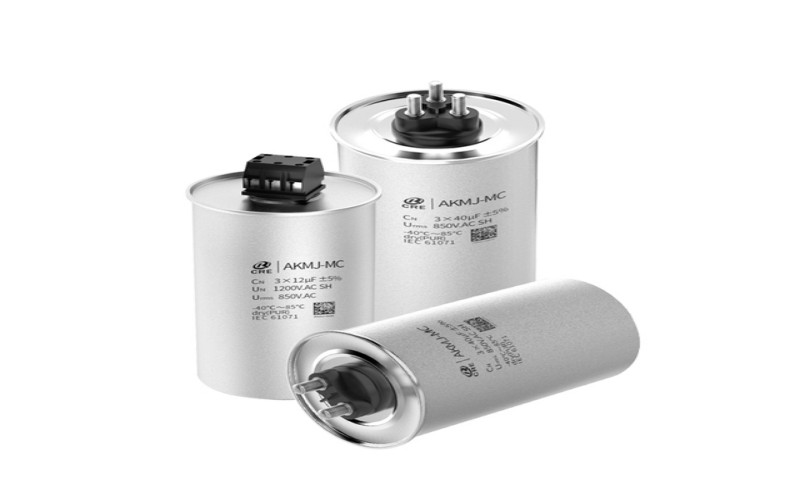
1. Motor Startup → Start Capacitors
Start capacitors provide a temporary energy boost to kickstart motors. They are used for applications where motors need a surge of energy to overcome inertia, such as compressors or pumps.
2. Continuous Motor Operation → Run Capacitors
For motors that run continuously, run capacitors are used to stabilize the motor's electrical current and improve efficiency. These capacitors remain in the circuit while the motor is operating.
3. Harmonic Filtering and Voltage Stabilization → AC Filter Capacitors
AC Filter Capacitors are designed to reduce high-frequency noise, suppress harmonics, and stabilize voltage in AC power circuits. They are essential in systems such as inverters, UPS systems, and wind power converters.
1. Capacitance Value and Tolerance
Ensure the capacitance value aligns with the system requirements, taking into account the need for voltage stabilization and ripple current reduction in AC filtering.
2. Rated Voltage and Ripple Current Capability
AC Filter Capacitors must be chosen based on the system's voltage requirements and the amount of ripple current generated by the switching frequency. Inverter systems, for example, often produce significant ripple currents that capacitors must withstand.
3. Operating Temperature Range
Consider the temperature range in which the capacitor will operate. AC Filter Capacitors in outdoor systems like wind power and photovoltaic converters need to perform efficiently in extreme temperatures, often ranging from -40°C to 105°C.
1. Industrial Inverter Systems
Systems like inverters for motor drives or power conversion require capacitors that can handle high-frequency switching and large ripple currents. AC Filter Capacitors are essential for these environments to ensure smooth and reliable power output.
2. Renewable Energy Equipment (Wind Power and Photovoltaic)
In renewable energy systems, capacitors play a critical role in maintaining consistent output power. AC Filter Capacitors ensure that the conversion from DC to AC is stable, and the electrical noise is minimized to protect sensitive components.
3. Backup Power Equipment (UPS)
For UPS systems, capacitors help manage voltage and provide stable backup power when the main power source fails. AC Filter Capacitors ensure that any fluctuations are filtered out, maintaining clean energy output for sensitive equipment.
1. Match Capacitor Characteristics with System Voltage
Capacitors need to match the voltage levels of the system. AC Filter Capacitors used in inverters or wind power systems must be able to handle the specific voltage ratings without failing due to overvoltage conditions.
2. Select Components Designed for Power Electronics
Choosing capacitors designed for high-frequency switching circuits ensures that they can handle rapid voltage changes without degradation. Manufacturers like CRE New Energy PTE. LTD offer AC Filter Capacitors designed to withstand these rigorous conditions while maintaining high performance.
Start capacitors, run capacitors, and AC Filter Capacitors serve distinct functions in AC systems. Choosing the right capacitor depends on the system’s specific needs, such as motor startup or harmonic filtering. CRE New Energy PTE. LTD offers high-performance AC Filter Capacitors that enhance power quality and system stability, especially in inverter, wind power, photovoltaic, and UPS systems, providing long-lasting, reliable performance for critical applications.
A: AC Filter Capacitors are used to reduce high-frequency noise, stabilize voltage, and improve power quality in AC systems, especially in inverters, UPS, and renewable energy systems.
A: AC Filter Capacitors focus on filtering harmonic interference and voltage smoothing, while start capacitors provide energy for motor startup, and run capacitors support continuous motor operation.
A: AC Filter Capacitors are essential in systems like inverters, wind power, and photovoltaic converters to maintain stable power output and reduce ripple currents.


