
- All
- Product Name
- Product Keyword
- Product Model
- Product Summary
- Product Description
- Multi Field Search
Views: 0 Author: Site Editor Publish Time: 2026-01-05 Origin: Site
Have you ever wondered how much energy a storage capacitor can hold? Energy storage capacitors play a crucial role in modern electronics. Understanding their energy capacity is essential for various applications, from medical devices to renewable energy systems. In this post, we'll explore the fundamentals of energy storage capacitors, how they work, and their applications.
Energy storage capacitors are essential components in electronic devices. They store electrical energy for later use, making them critical in various applications. Essentially, a capacitor consists of two conductive plates separated by an insulating material known as a dielectric. When voltage is applied, one plate accumulates positive charge while the other holds negative charge, creating an electric field. This mechanism allows capacitors to store energy efficiently.
There are several types of energy storage capacitors, each designed for specific applications:
● Electrolytic Capacitors: These capacitors are widely used for their high capacitance values. They are polarized, meaning they must be connected correctly in a circuit. Electrolytic capacitors are commonly found in power supply circuits and audio equipment, where they help smooth out voltage fluctuations.
● Ceramic Capacitors: Known for their reliability and stability, ceramic capacitors are often used in high-frequency applications. They come in various capacitance values and are non-polarized, making them versatile for different circuits. You’ll find them in everything from RF circuits to decoupling applications.
● Film Capacitors: These capacitors use a thin plastic film as the dielectric material. They are appreciated for their low losses and high stability over time. Film capacitors are ideal for applications requiring precision, such as audio equipment and timing circuits.
● Supercapacitors: Also known as ultracapacitors, these devices can store much more energy than traditional capacitors. They bridge the gap between capacitors and batteries, offering rapid charge and discharge capabilities. Supercapacitors are commonly used in energy storage systems, regenerative braking in vehicles, and backup power applications.
Type | Energy Storage Capacity | Voltage Rating | Common Applications |
Electrolytic | High | Moderate | Power supplies, audio equipment |
Ceramic | Low to Moderate | High | RF circuits, decoupling |
Film | Moderate | High | Timing circuits, audio applications |
Supercapacitor | Very High | Low to Moderate | Energy storage systems, electric vehicles |
Each type of capacitor has its unique strengths and weaknesses. For instance, while electrolytic capacitors excel in energy storage, they are not suitable for high-frequency applications. On the other hand, ceramic capacitors, with their high voltage ratings, are perfect for RF circuits but may have lower energy storage capacity.
Understanding these differences helps in selecting the right capacitor for your specific needs. Whether you are designing a circuit or troubleshooting an existing one, knowing the characteristics of these energy storage capacitors is crucial.
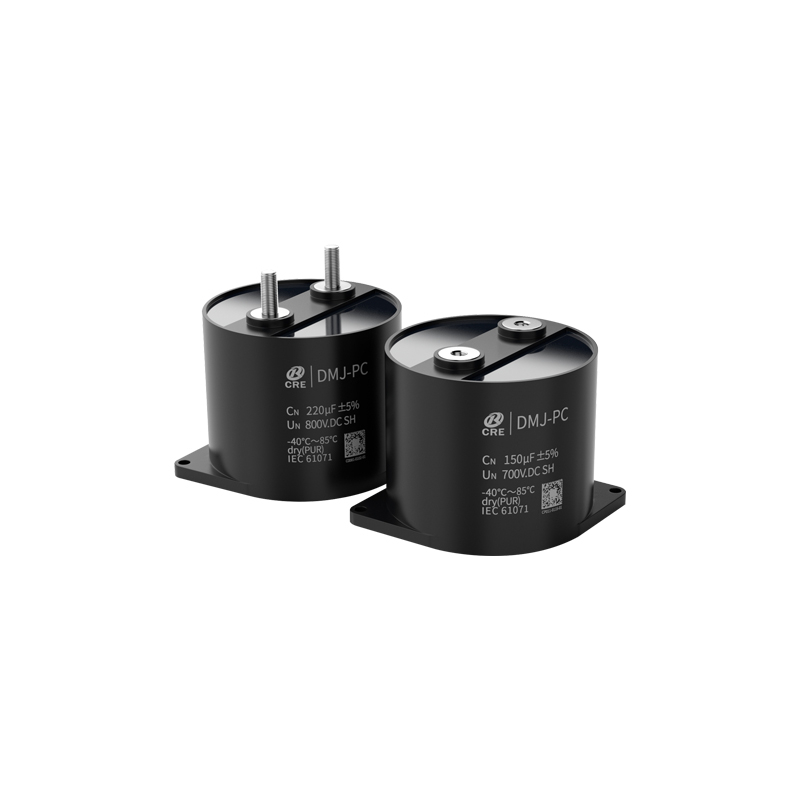
Energy storage capacitors operate based on fundamental principles of physics and electrical engineering. At their core, they store electrical energy by accumulating charge on their plates. When a voltage is applied, one plate gathers positive charge while the other holds negative charge. This separation of charge creates an electric field between the plates, allowing the capacitor to store energy efficiently.
The charge storage mechanism is central to how capacitors function. When connected to a power source, electrons flow onto one plate, creating a surplus of negative charge. Meanwhile, the other plate loses electrons, resulting in a positive charge. This process continues until the voltage across the capacitor matches the voltage of the power source.
● Role of Dielectric Materials: Dielectric materials are insulators placed between the capacitor's plates. They enhance the capacitor's ability to store energy by increasing the electric field strength. Common dielectric materials include air, ceramic, and plastic. The choice of dielectric affects the capacitor's performance significantly.
● Importance of Dielectric Strength: Dielectric strength refers to the maximum electric field a dielectric material can withstand without breaking down. Higher dielectric strength allows for greater voltage ratings, which means capacitors can store more energy. For example, a capacitor with a high dielectric strength can operate safely at higher voltages, increasing its energy storage capacity.
To quantify the energy stored in a capacitor, we use the formula:
$$ E = \frac{1}{2} C V^2 $$
● Breakdown of Each Component:Capacitance (C): Measured in farads (F), capacitance indicates the capacitor's ability to store charge. Higher capacitance means more stored energy.
○ Voltage (V): This is the voltage applied across the capacitor. It directly influences the energy stored; as voltage increases, energy increases exponentially.
○ Energy (E): The total energy stored in the capacitor, measured in joules (J).
This formula highlights the relationship among capacitance, voltage, and energy. For instance, doubling the voltage quadruples the energy stored, demonstrating the significant impact voltage has on energy storage.
Several factors influence how much energy a capacitor can store:
● Capacitance Value: The higher the capacitance, the more charge it can hold. Capacitors come in various capacitance values, tailored for different applications.
● Voltage Rating: Each capacitor has a maximum voltage it can handle. Exceeding this rating can lead to failure or damage. Understanding voltage ratings is crucial for safe operation.
● Dielectric Material Properties: Different dielectrics have varying effects on energy storage. Materials with higher dielectric constants allow for more efficient energy storage.
● Average Voltage During Charging: When charging a capacitor, the average voltage can affect energy calculations. The energy stored is not just about the peak voltage but also how the voltage varies during the charging process.
In practical terms, if a capacitor charges to a lower average voltage, the energy stored will be less than expected. This aspect is vital for applications requiring precise energy delivery, such as in timing circuits or power supplies.
Understanding how to calculate the energy storage capacity of capacitors is essential for various applications. By knowing the capacitance and voltage, we can determine how much energy a capacitor can hold. Let's break down the calculation process step by step.
First, we need to determine the capacitance of the capacitor. Capacitance, measured in farads (F), indicates how much charge a capacitor can store per volt. You can find the capacitance value printed on the capacitor itself or in its specifications.
Next, measuring the voltage rating is crucial. This is the maximum voltage the capacitor can handle safely. Again, this information is typically printed on the capacitor or available in its datasheet.
Now, let’s look at the energy storage formula:
$$ E = \frac{1}{2} C V^2 $$
where:
● E is the energy stored (in joules),
● C is the capacitance (in farads),
● V is the voltage (in volts).
To illustrate this, let’s consider a real-world example involving a heart defibrillator capacitor. Suppose the capacitor has an energy storage capacity of ( E = 4.00 \times 10^2 ) joules and operates at a voltage of ( V = 1.00 \times 10^4 ) volts.
Using the formula, we can rearrange it to find the capacitance:
$$ C = \frac{2E}{V^2} $$
Plugging in the values:
$$ C = \frac{2 \times 4.00 \times 10^2}{(1.00 \times 10^4)^2} = \frac{800}{100000000} = 8 \times 10^{-6} \text{ F} \text{ or } 8 \mu\text{F} $$
This calculation shows that the heart defibrillator capacitor has a capacitance of 8 microfarads, which is typical for such medical devices.
Let’s explore how energy storage varies across different capacitors. For instance, consider a typical capacitor rated at 10 microfarads (10μF) charged to 100 volts. Using the energy formula:
$$ E = \frac{1}{2} \times 10 \times 10^{-6} \text{ F} \times (100 \text{ V})^2 $$
Calculating this gives:
$$ E = \frac{1}{2} \times 10 \times 10^{-6} \times 10000 = 0.5 \text{ joules} $$
This means a 10μF capacitor charged to 100 volts can store 0.5 joules of energy.
Here's a quick comparison of energy storage capabilities among various capacitor types:
Capacitor Type | Capacitance (μF) | Voltage (V) | Energy Stored (J) |
Electrolytic | 1000 | 25 | 0.3125 |
Ceramic | 10 | 100 | 0.005 |
Film | 100 | 50 | 0.125 |
Supercapacitor | 5000 | 2 | 0.01 |
This table illustrates how different types of capacitors can store varying amounts of energy based on their capacitance and voltage ratings. Understanding these differences is vital when selecting capacitors for specific applications, whether in consumer electronics or industrial systems.
Energy storage capacitors play a vital role in various applications, from everyday electronic devices to specialized medical equipment. Their ability to store and release energy quickly makes them indispensable in many fields.
In our daily lives, capacitors are everywhere. They are crucial components in electronic devices like calculators and cameras. For instance, in a calculator, capacitors help stabilize the power supply, ensuring accurate calculations. In cameras, they can store energy needed for flash photography, providing a quick burst of light when you snap a picture.
Additionally, capacitors are essential in power systems. They are used for smoothing and filtering signals, which helps maintain a stable voltage in circuits. This function is particularly important in power supply units, where fluctuations can lead to device malfunctions.
● Capacitors in Microelectronics: These components also play a key role in preserving memory in electronic devices. In microprocessors and memory chips, capacitors help store bits of information temporarily. This storage is crucial for the quick retrieval and processing of data.
Beyond everyday devices, energy storage capacitors are vital in specialized applications. In medical devices like defibrillators, capacitors store and discharge energy rapidly to deliver life-saving shocks to patients experiencing cardiac arrest. This quick discharge is critical for restoring normal heart rhythms.
Moreover, capacitors are increasingly important in renewable energy systems. For example, in solar inverters and wind turbines, they help manage energy flow and stabilize output. Capacitors can store excess energy generated during peak production times and release it when demand increases, ensuring a steady supply of power.
Automated External Defibrillators (AEDs) are a perfect example of how capacitors are utilized for emergency medical responses. These devices analyze a patient's heart rhythm and determine if a shock is necessary. If so, the AED uses its internal capacitors to store energy and deliver a high-voltage shock to the heart. This process can be life-saving, emphasizing the critical role of capacitors in emergency situations.
Application | Description | Role of Capacitors |
Everyday Devices | Calculators, cameras | Stabilizing power supply, energy bursts |
Power Systems | Smoothing, filtering | Maintaining stable voltage |
Microelectronics | Memory preservation in chips | Temporary data storage |
Medical Devices | Defibrillators | Rapid energy discharge for shocks |
Renewable Energy Systems | Solar inverters, wind turbines | Energy management and stabilization |
AEDs | Emergency cardiac response | Storing and delivering energy for shocks |
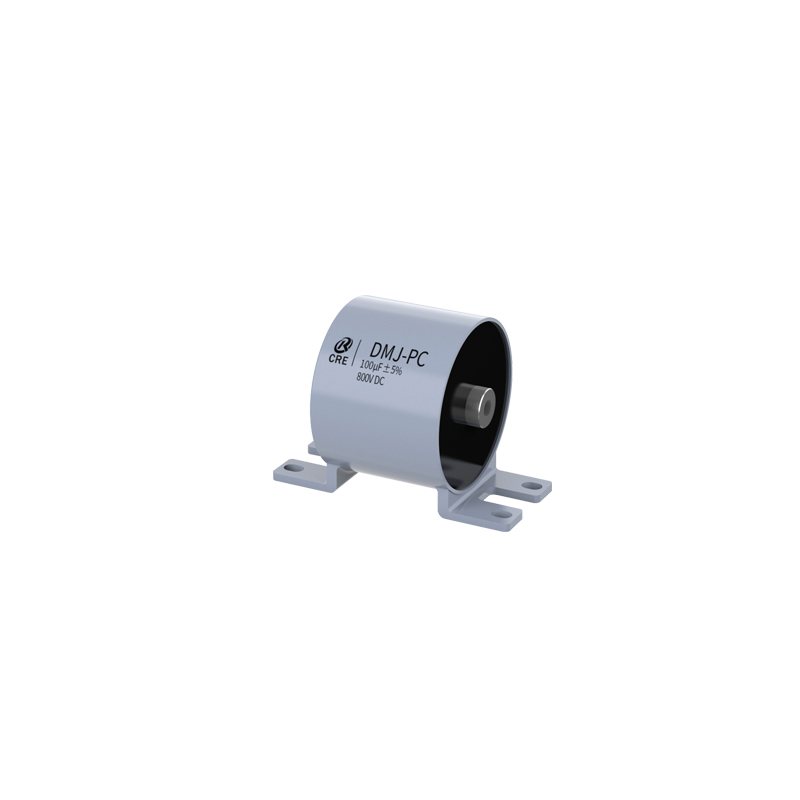
Energy storage capacitors offer several benefits, making them a popular choice in various applications. However, they also come with limitations that must be considered. Understanding both sides helps us make informed decisions about their use.
One of the most significant advantages of energy storage capacitors is their fast charging and discharging capabilities. Unlike batteries, which can take longer to charge and discharge, capacitors can deliver energy almost instantaneously. This feature is particularly useful in applications requiring quick bursts of power, such as in camera flashes or in stabilizing voltage in power supplies.
● High Power Density: Capacitors have a high power density, meaning they can deliver substantial power over short periods. This characteristic makes them ideal for applications where quick energy delivery is crucial, such as in electric vehicles during acceleration.
● Long Cycle Life Compared to Batteries: Energy storage capacitors typically have a much longer cycle life than batteries. While batteries may degrade after a few hundred charge cycles, capacitors can endure hundreds of thousands of cycles without significant performance loss. This longevity translates to reduced replacement costs and less environmental impact over time.
Despite their advantages, energy storage capacitors have some limitations that are important to consider.
● Lower Energy Density Compared to Batteries: One of the main drawbacks is their lower energy density. Capacitors store less energy per unit volume compared to batteries. This means that for applications requiring long-term energy storage, batteries might be the better choice.
● Voltage Limitations and Breakdown Risks: Capacitors have specific voltage ratings, and exceeding these ratings can lead to breakdown and failure. This limitation makes it crucial to use capacitors within their designated voltage range to prevent catastrophic failure.
● Size and Cost Considerations: While capacitors are compact, achieving high capacitance values often requires larger physical sizes. Additionally, high-quality capacitors can be more expensive than batteries, particularly for specialized applications.
● Work Done During Charge Changes: When inserting dielectric materials into capacitors, there are implications for energy storage and work done. The choice of dielectric affects how much energy can be stored and the efficiency of the capacitor. For instance, higher dielectric constants generally allow for better energy
Energy storage capacitors are vital in modern technology. They offer fast charging, high power density, and long cycle life. Understanding their energy storage capabilities is crucial for selecting the right components for specific applications. Capacitors can be an excellent choice for devices requiring quick energy bursts, such as cameras and electric vehicles. We encourage readers to consider the benefits of capacitors in their projects. Share your experiences with energy storage capacitors and subscribe for more insights on energy storage technologies.
At CRE, our products provide unique advantages, ensuring reliable performance and efficiency in energy storage solutions. Explore our offerings to see how we can add value to your applications.
A: Energy storage capacitors are devices that store electrical energy, allowing for quick discharge and recharge cycles.
A: They store energy by accumulating charge on their plates when voltage is applied, creating an electric field.
A: They offer fast charging, high power density, and longer cycle life compared to batteries, making them ideal for various applications.
A: They provide quick bursts of energy, stabilizing power supply in devices like cameras and calculators.
A: While energy storage capacitors charge and discharge faster, batteries typically have higher energy density for long-term storage.
A: Factors include capacitance value, voltage ratings, and the type of dielectric material used in the capacitor.


