
- All
- Product Name
- Product Keyword
- Product Model
- Product Summary
- Product Description
- Multi Field Search
Views: 0 Author: Site Editor Publish Time: 2026-01-11 Origin: Site
Have you ever wondered how devices store and release energy so quickly? Capacitors play a crucial role in this process. Understanding energy storage in capacitors is essential for grasping modern technology, especially as they become vital in renewable energy and electric vehicles. In this post, we'll explore how capacitors store energy, their applications, and their importance in various industries.
Capacitors are essential components in electrical systems, designed to store energy for later use. They achieve this by accumulating electrical charge on their plates, creating an electric field. This process allows capacitors to store energy electrostatically, which is fundamentally different from batteries, which rely on electrochemical reactions to store energy. While batteries can provide a steady flow of energy over a longer period, capacitors excel at releasing energy quickly, making them ideal for applications requiring high power output.
Feature | Capacitors | Batteries |
Energy Storage Method | Electrostatic storage | Electrochemical storage |
Discharge Rate | Rapid discharge | Slower, steady discharge |
Lifespan | Long lifespan (up to 20 years) | Limited lifespan due to chemical wear |
Energy Density | Lower energy density | Higher energy density |
In renewable energy systems, capacitors play a crucial role by providing rapid bursts of energy. For instance, during peak demand periods, they can quickly release stored energy to stabilize the grid. This capability is vital for integrating renewable sources like solar and wind, which can be intermittent.
Capacitors are widely used in various applications due to their ability to store and release energy efficiently. Here are some key areas where they make a significant impact:
● Power Conditioning: In renewable energy systems, capacitors help smooth out fluctuations in power output. They store excess energy generated during peak production and release it when needed, ensuring a stable supply.
● Energy Recovery: Capacitors are used in regenerative braking systems in electric vehicles. They capture kinetic energy during braking and store it, allowing for quick energy release when accelerating.
● Uninterruptible Power Supplies (UPS): Capacitors provide backup power instantly during outages. They ensure that critical systems remain operational while a generator or battery system kicks in.
These applications highlight the versatility of capacitors as energy storage devices, emphasizing their importance in modern technology and renewable energy integration. By understanding how capacitors work, we can better appreciate their role in enhancing energy efficiency and reliability.
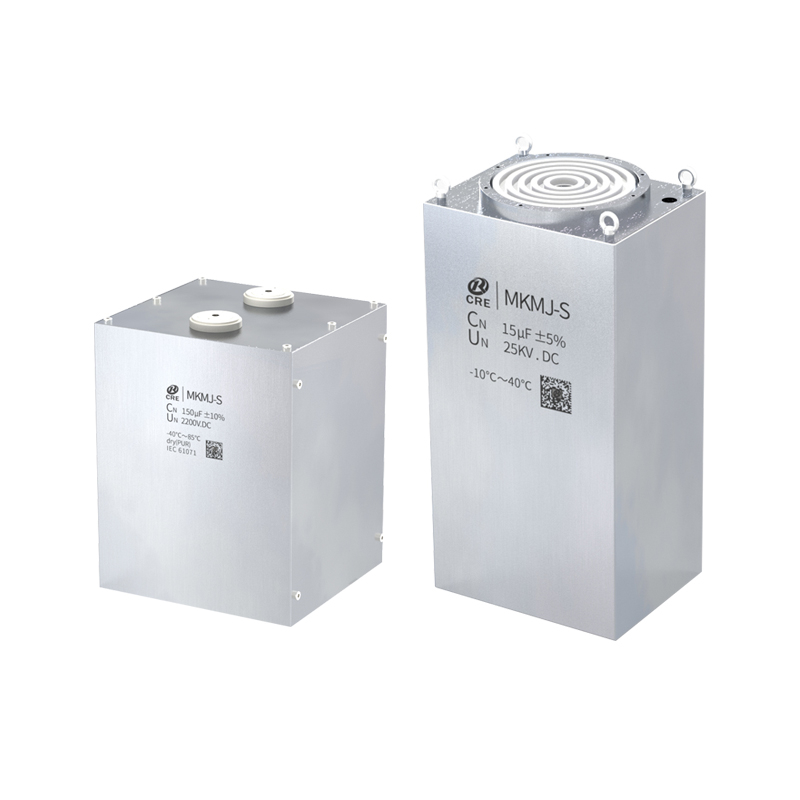
Capacitors store energy through a fascinating physical process. When a voltage is applied across the capacitor plates, electrical charge accumulates on each plate. This accumulation creates an electric field between the plates, which is fundamental to how capacitors function. Essentially, the greater the voltage, the more charge can be stored, leading to increased energy storage capacity.
Voltage plays a critical role in determining how much energy a capacitor can store. The relationship between voltage and stored energy can be expressed mathematically. The formula for calculating the energy stored in a capacitor is given by:
$$E = \frac{1}{2} C V^2$$
In this equation:
● E represents the energy stored, measured in joules (J).
● C is the capacitance, measured in farads (F), which indicates the capacitor's ability to store charge.
● V is the voltage across the capacitor, measured in volts (V).
This formula shows that energy storage increases significantly with higher voltage. For example, doubling the voltage results in quadrupling the stored energy. This relationship highlights why capacitors are often used in applications requiring quick bursts of energy.
During the charging process, the average voltage across a capacitor is crucial for accurate energy calculations. Initially, when a capacitor is uncharged, the voltage is zero. As it charges, the voltage gradually increases until it reaches the applied voltage. The average voltage during this process can be considered as half of the final voltage.
This average voltage impacts the energy stored in the capacitor. For instance, if a capacitor is charged to 10 volts, the average voltage during charging is 5 volts. Thus, when using the formula, we can see how the energy stored is calculated based on this average:
$$E = \frac{1}{2} C (V_{average})^2$$
Concept | Explanation |
Charge Accumulation | Charge builds up on capacitor plates. |
Voltage's Role | Higher voltage allows for greater energy storage. |
Energy Formula | $$E = \frac{1}{2} C V^2$$ |
Average Voltage | Average voltage during charging affects energy calculation. |
By understanding these principles, we can appreciate how capacitors efficiently store energy and their vital role in renewable energy systems. Their ability to quickly release energy makes them invaluable in stabilizing power supplies and enhancing system performance.
Capacitors come in various types, each designed for specific applications and energy storage capacities. Understanding these types helps us appreciate their roles in renewable energy systems. Here’s a closer look at some common types of capacitors.
Electrolytic capacitors are widely used due to their high capacitance values. They consist of two conductive plates separated by an electrolyte, allowing them to store a significant amount of energy.
● Characteristics: They typically have a large capacitance, ranging from microfarads (µF) to farads (F). However, they usually operate at lower voltage ratings.
● Applications: Commonly found in camera flashes, power supplies, and audio equipment, they provide quick bursts of energy when needed.
Ceramic capacitors are another popular type, known for their stability and reliability. Made from ceramic materials, they are often used in high-frequency applications.
● Uses: These capacitors are commonly found in electronic circuits, especially in filtering and bypass applications.
● Advantages: They offer low equivalent series resistance (ESR) and can operate at higher temperatures, making them suitable for various environments.
Supercapacitors, also known as ultracapacitors, are a newer technology that bridges the gap between traditional capacitors and batteries.
● Definition: They can store much larger amounts of energy compared to standard capacitors, often exceeding 2,000 farads (2kF).
● Comparison: Unlike traditional capacitors, supercapacitors can retain energy for longer periods while still allowing rapid charge and discharge cycles.
● Breakthroughs: Recent advancements in materials have significantly improved their performance, making them increasingly viable for energy storage in renewable energy systems.
To understand how different capacitors store energy, it’s helpful to compare their capacities. The energy stored in a capacitor can be calculated using the formula:
$$E = \frac{1}{2} C V^2$$
Where:
● E = Energy stored (in joules)
● C = Capacitance (in farads)
● V = Voltage across the capacitor (in volts)
Type of Capacitor | Capacitance Range | Voltage Ratings | Typical Applications |
Electrolytic | µF to F | Low (up to 50V) | Camera flashes, power supplies |
Ceramic | pF to µF | Moderate (up to 100V) | Filtering, bypass circuits |
Supercapacitor | F (up to >2kF) | High (up to 2.7V) | Energy storage, regenerative braking |
The voltage across a capacitor significantly impacts its energy storage capacity. Higher voltage allows for more energy to be stored, as illustrated by the energy formula. During the charging process, the average voltage is crucial for calculating the total energy stored. For example, if a capacitor is charged to a maximum voltage of 10 volts, the average voltage during charging is effectively 5 volts, which affects the energy calculation.
Understanding these different types of capacitors and their energy storage capacities is essential for leveraging their unique properties in renewable energy systems. By selecting the right capacitor for specific applications, we can enhance energy efficiency and system performance.
Capacitors are incredibly versatile components used in various applications, from everyday gadgets to complex industrial systems. Their ability to store and quickly release energy makes them essential in many technologies, particularly in renewable energy systems.
One of the most common uses of capacitors is in camera flashes. When you press the shutter button, the capacitor charges up, storing energy until it's needed. Once the flash is triggered, the capacitor discharges rapidly, releasing a burst of light that illuminates the scene. This quick discharge allows photographers to capture images in low-light conditions effectively.
● Charging Process: The capacitor charges over a few seconds, depending on the design of the camera and the power source.
● Discharge: The stored energy is released almost instantaneously, creating a bright flash.
Capacitors also play a crucial role in everyday electronic devices, such as calculators and power supplies. In these applications, they help stabilize voltage and maintain memory functions.
● Memory Preservation: In devices like calculators, capacitors store small amounts of energy to keep data active even when the main power is off. This ensures that users do not lose their calculations when changing batteries or turning off the device.
In industrial settings, capacitors are vital components of uninterruptible power supplies (UPS). These systems provide backup power during outages, ensuring that critical equipment remains operational.
● Importance During Outages: Capacitors in a UPS can deliver immediate power, allowing systems to switch to backup sources without interruption. This is crucial for hospitals, data centers, and manufacturing facilities where downtime can lead to significant losses.
Capacitors are also key in regenerative braking systems found in electric vehicles. During braking, kinetic energy is captured and stored in capacitors instead of being wasted as heat.
● Energy Storage and Reuse: When the vehicle accelerates again, the stored energy is released, providing additional power. This process enhances overall energy efficiency and extends the vehicle's range.
In renewable energy systems, capacitors help regulate voltage and stabilize power output. They play a significant role in both wind and solar power installations.
● Voltage Stabilization: Capacitors smooth out fluctuations in energy generation due to variable conditions, such as changes in wind speed or sunlight. This stabilization ensures a consistent power supply to the grid.
● Energy Regulation: By storing excess energy generated during peak production times, capacitors can release this energy during periods of high demand, improving the reliability of renewable energy sources.
Application Type | Description | Key Benefits |
Camera Flashes | Stores energy for quick bursts of light | Enhances low-light photography |
Electronic Devices | Maintains power for memory functions | Prevents data loss during power interruptions |
Uninterruptible Power Supplies | Provides backup power during outages | Ensures critical systems remain operational |
Regenerative Braking | Captures and reuses kinetic energy in EVs | Improves energy efficiency and extends range |
Renewable Energy Systems | Stabilizes voltage and regulates energy output | Enhances reliability and efficiency of power supply |
By leveraging the unique properties of capacitors, various industries can enhance performance, improve efficiency, and ensure reliability in their systems. Their applications span a wide range, showcasing their significance in both everyday life and advanced technologies.
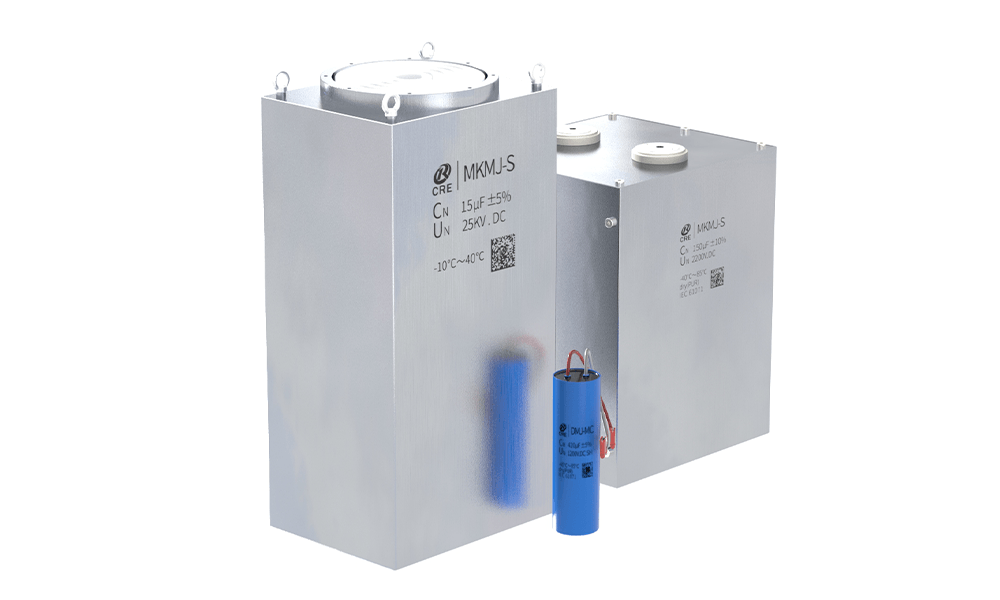
Capacitors offer several significant advantages for energy storage, making them essential components in various applications, especially in renewable energy systems. Their unique characteristics allow them to outperform traditional batteries in many respects.
One of the standout features of capacitors is their ability to discharge energy rapidly. Unlike batteries, which rely on chemical reactions to release energy, capacitors store energy electrostatically. This means they can deliver energy almost instantaneously.
● Low Internal Resistance: Capacitors have much lower internal resistance compared to batteries. This property enables them to release energy quickly, making them ideal for applications requiring quick bursts of power, such as in camera flashes or regenerative braking systems in electric vehicles.
Capacitors, particularly supercapacitors, are known for their impressive lifespan and reliability.
● Lifespan: Many capacitors can last over 20 years while maintaining their voltage ratings. For instance, supercapacitors can endure hundreds of thousands of charge and discharge cycles without significant degradation, far surpassing the lifespan of conventional batteries.
● Consistency: This longevity means that systems relying on capacitors for energy storage can operate more reliably over time, reducing the need for frequent replacements and maintenance.
While capacitors offer many advantages, safety is a crucial consideration when using them for energy storage.
● Discharge Before Handling: Capacitors can hold a significant charge, which can pose a risk of electrical shock if not handled properly. It is essential to discharge capacitors before working on any electronic equipment to prevent accidents. This precaution ensures that any stored energy is safely released, minimizing the risk of injury.
Advantage | Description | Key Benefits |
Quick Discharge Capabilities | Rapid energy release due to low internal resistance | Ideal for applications requiring immediate power |
Longevity and Reliability | Lifespan of over 20 years, especially for supercapacitors | Reduces maintenance costs and increases system reliability |
Safety Considerations | Need to discharge before handling | Prevents electrical shock and ensures safe operation |
By understanding these advantages, we can better appreciate why capacitors are becoming increasingly popular in energy storage applications, especially in the context of renewable energy systems. Their quick discharge capabilities, longevity, and safety features make them invaluable in modern technology.
Energy storage in capacitors involves the accumulation of electrical charge, allowing for rapid energy release. Capacitors excel in applications requiring quick discharge, longevity, and reliability. Their unique properties make them vital in renewable energy systems. As a leader in this field, CRE offers innovative capacitor solutions that enhance energy storage efficiency. Explore more about capacitors and their applications to understand their significant role in modern technology. Visit CRE for valuable products and services that provide exceptional value in energy storage.
A: Energy storage in a capacitor refers to the ability of the capacitor to accumulate and hold electrical charge for later use.
A: Energy storage capacitors work by storing energy electrostatically, allowing for rapid discharge when needed.
A: They are crucial for applications requiring quick bursts of energy, enhancing performance in electronic devices.
A: They offer quick discharge capabilities, longevity, and reliability compared to traditional batteries.
A: Unlike batteries, energy storage capacitors discharge energy faster and have a longer lifespan, making them ideal for specific applications.
A: The cost can vary based on capacitance, voltage ratings, and the specific technology used in the capacitors.


