
- All
- Product Name
- Product Keyword
- Product Model
- Product Summary
- Product Description
- Multi Field Search
Views: 0 Author: Site Editor Publish Time: 2026-03-24 Origin: Site
As the demand for photovoltaic (PV) systems continues to rise, the importance of selecting the right components becomes increasingly critical. Capacitors, especially in PV inverters and MPPT circuits, play a crucial role in maintaining system efficiency and reliability. Improper selection of capacitors can lead to efficiency losses, higher maintenance costs, and safety risks. In this article, we will explore the disadvantages of improper capacitor selection in PV systems, focusing on how film capacitors provide a more reliable and cost-effective solution for DC-link filtering.
In photovoltaic (PV) systems, capacitors are key components that ensure the smooth operation of inverters, filters, and MPPT (Maximum Power Point Tracking) circuits. One of the significant risks associated with improper capacitor selection is electrolyte degradation, especially in aluminum electrolytic capacitors. These capacitors, often chosen for their cost-effectiveness, rely on a liquid electrolyte as their dielectric material. Over time, under high operational temperatures, the electrolyte in these capacitors begins to evaporate. This evaporation leads to a decrease in capacitance, an increase in Equivalent Series Resistance (ESR), and ultimately, a reduction in the capacitor's performance.
Electrolyte evaporation typically occurs when capacitors are subjected to prolonged periods of high temperatures, which is common in PV inverters due to the harsh outdoor environments. As the electrolyte evaporates, the internal resistance increases, which not only reduces the efficiency of the capacitor but also generates additional heat. This can create a dangerous feedback loop where increased ESR leads to more heat, which accelerates the degradation process. Over time, this degradation significantly shortens the lifespan of the capacitor and the inverter system as a whole, requiring frequent replacements and increasing system downtime.
Another consequence of poor capacitor selection is the increased risk of inverter failures, leading to higher maintenance costs. When capacitors degrade, their ability to stabilize the DC-link voltage becomes compromised, causing voltage fluctuations that can stress sensitive components such as IGBTs (Insulated Gate Bipolar Transistors). These components are integral to the switching function of PV inverters, and any instability in the power supply can lead to their failure. Frequent capacitor failure is one of the leading causes of inverter breakdowns, requiring costly repairs and replacements.
Inverters in PV systems are expected to last for 20 to 25 years, but poorly selected or degraded capacitors can significantly reduce this lifespan. This not only increases operational costs but also results in unplanned downtimes, during which energy generation is halted. The need for regular maintenance to replace faulty capacitors or repair the inverter can eat into the overall return on investment (ROI) of the solar energy system.
In contrast, film capacitors—such as those developed by CRE New Energy PTE. LTD—offer a more reliable alternative to aluminum electrolytic capacitors. These capacitors use a solid dielectric structure instead of a liquid electrolyte, meaning there is no risk of electrolyte evaporation over time. The DMJ-PC series film capacitors, for example, are designed with a robust, dry resin infusion process that significantly enhances their lifespan and performance stability.
These capacitors have several advantages in PV applications:
● Longer Lifespan: With no liquid electrolyte to degrade, film capacitors can withstand higher operational temperatures and harsh environmental conditions, significantly extending their service life. The DMJ-PC series has a life expectancy of up to 100,000 hours under rated voltage conditions.
● Stable Performance: Film capacitors provide more stable performance throughout their lifespan, reducing the need for frequent replacements and maintenance.
● Self-Healing Properties: One of the key features of film capacitors is their self-healing capability. If a small fault or microscopic breakdown occurs within the dielectric material, the capacitor can recover without catastrophic failure. This is especially important in high-stress environments like PV inverters, where reliability is crucial.
By incorporating film capacitors, PV system developers can reduce the risk of premature failure, minimize maintenance costs, and ensure that inverters and other key components perform reliably throughout their lifespan.
Equivalent Series Resistance (ESR) is a critical parameter for capacitors used in PV systems. High ESR in capacitors, especially in aluminum electrolytic capacitors, leads to significant energy losses. As ripple current flows through the capacitor, the internal resistance generates heat, reducing the overall efficiency of the PV system. This heat dissipation directly affects the inverter efficiency, as it wastes energy that could otherwise be used for power conversion.
In the case of high ESR, the capacitor's ability to filter ripple currents becomes compromised, which results in less effective stabilization of the DC-link voltage. Over time, this inefficiency leads to higher operating temperatures within the inverter, potentially causing thermal stress to sensitive components such as IGBTs and capacitors themselves. This not only reduces the overall system efficiency but can also accelerate the degradation of other components, further compounding the issue.
Another significant issue caused by poor capacitor selection is the generation of harmonic distortion. Harmonics are unwanted frequencies that are generated due to non-linear currents in the electrical system, often caused by switching devices in inverters. Capacitors play a vital role in filtering these harmonics, ensuring that the power supplied to the grid is clean and stable.
If capacitors are not correctly selected for the application, such as using those with inadequate impedance characteristics at the operating frequency, they fail to suppress these harmonics effectively. This mismatch leads to an increase in harmonic distortion, which can negatively affect the grid power quality and even cause equipment malfunctions. Excessive harmonic currents can also damage other sensitive equipment within the PV system, such as transformers, and lead to non-compliance with grid power quality standards.
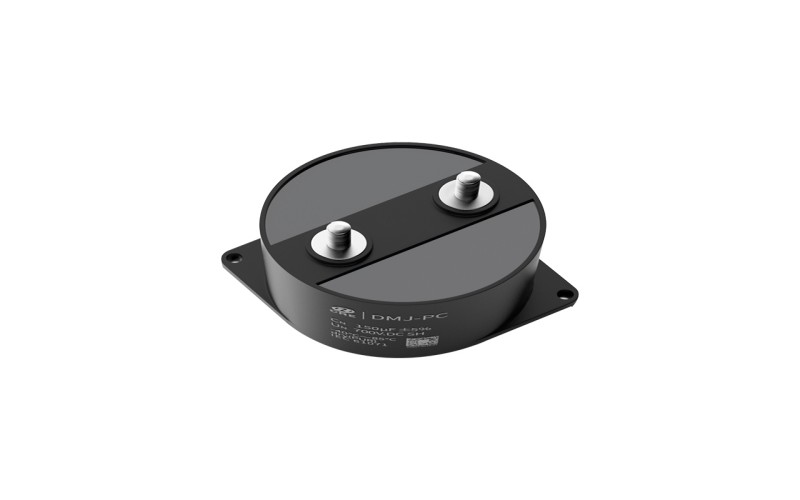
Film capacitors—such as the DMJ-PC series from CRE New Energy PTE. LTD—provide several advantages in addressing the challenges of high ESR and harmonic distortion. These capacitors are designed with low ESR and high ripple current handling capability, which ensures efficient energy storage and filtering in high-frequency switching circuits. The benefits of film capacitors include:
● Low ESR: Film capacitors maintain low ESR even under high ripple currents, preventing energy loss and improving overall inverter efficiency.
● High Ripple Current Handling: These capacitors are designed to handle higher ripple currents, ensuring that the energy conversion process remains efficient and stable even during high-load conditions.
● Superior High-Frequency Performance: Film capacitors excel in high-frequency applications like PV inverters, offering excellent filtering performance at switching frequencies and minimizing harmonic distortion.
Feature | Film Capacitors | Electrolytic Capacitors |
ESR (Equivalent Series Resistance) | Very Low | Higher |
Ripple Current Handling | High | Moderate |
Thermal Management | Excellent | Poor |
Lifetime | Up to 100,000 hours | 10,000–20,000 hours |
Self-Healing | Yes | No |
High-Frequency Performance | Excellent | Limited |
Flame Resistance | Yes | No |
By using film capacitors in PV systems, developers can achieve better performance, reduce energy losses, and ensure high power quality, leading to more efficient and reliable solar power generation.
In photovoltaic (PV) systems, DC-link capacitors play an essential role in stabilizing the voltage between the photovoltaic array and the inverter's DC bus. Insufficient capacitance can result in significant voltage fluctuations, particularly during high load or rapid changes in the input power from the solar panels. This fluctuation can create voltage ripples that stress the inverter's switching devices, such as IGBTs (Insulated Gate Bipolar Transistors), and reduce their efficiency.
Voltage instability in the DC-link also compromises the overall stability of the inverter. For example, high-voltage spikes caused by rapid switching or irregular input power can lead to incorrect operation or even damage the inverter components. Capacitors that are not adequately sized or chosen for the operational environment may fail to buffer these voltage changes properly, resulting in an increased likelihood of inverter malfunction.
To ensure system stability, film capacitors are often recommended over traditional electrolytic capacitors in DC-link applications. Film capacitors provide more consistent performance across a wider range of operating conditions, making them a more reliable choice in the long term for maintaining voltage stability.
Another significant challenge for capacitors in PV systems is high-frequency switching. Inverters in PV systems typically operate with high-frequency switching circuits that help maximize energy conversion efficiency. However, this high-frequency switching can induce parasitic inductance (ESL) in capacitors, which can lead to unwanted voltage spikes. These spikes occur when the switching devices rapidly turn on and off, creating momentary disruptions in the voltage levels within the DC-link circuit.
These voltage spikes can be harmful to sensitive electronic components, especially the IGBTs and diodes that control power flow. Capacitors with high ESL may exacerbate this issue, leading to voltage surges that can damage other system components or trigger unnecessary protections that cause the inverter to shut down unexpectedly.
To mitigate this, selecting capacitors with low ESL is crucial. Film capacitors offer superior high-frequency performance and are better equipped to handle these high-speed switching demands, providing a stable environment for the inverter and extending its operational lifespan.
To ensure optimal inverter stability, it is essential to choose capacitors that not only handle voltage fluctuations but also support the overall efficiency of the inverter. Film capacitors offer several advantages for DC-link applications due to their low ESR (Equivalent Series Resistance), high ripple current handling, and ability to withstand high dv/dt (rate of voltage change).
These capacitors are typically designed with better thermal management, which reduces the risk of overheating and enhances their reliability under continuous high-stress conditions. Additionally, they offer superior thermal conductivity and can operate across a wider range of temperatures, making them ideal for PV systems exposed to varying environmental conditions.
Capacitors, particularly electrolytic types, are susceptible to dielectric breakdown when the voltage applied exceeds their rated limit. This breakdown can cause a short circuit, which is potentially catastrophic, leading to overheating, leakage, and even fire. For PV systems, this represents a significant safety hazard since capacitors are integral to the inverter's power regulation.
The risk of dielectric breakdown is especially prevalent in environments with frequent voltage surges or over-voltage events. If capacitors are not selected with sufficient safety margins, they can fail under these conditions, potentially leading to expensive system failures, prolonged downtime, and hazardous situations.
To prevent such failures, film capacitors are often preferred because they offer self-healing properties. When a dielectric failure occurs, film capacitors can recover by rerouting the charge around the failure point, thus preventing total failure. This self-healing capability significantly reduces the risk of catastrophic failures compared to traditional electrolytic capacitors.
In outdoor installations, moisture and environmental exposure can accelerate the degradation of capacitors, particularly in PV systems. The ingress of moisture can lead to insulation breakdown and cause short circuits inside the capacitor, drastically reducing its life and potentially compromising the entire inverter system.
Capacitors used in PV systems must be resilient to environmental factors such as high humidity, temperature fluctuations, and exposure to dust and pollutants. Film capacitors, such as those from CRE New Energy PTE. LTD, are manufactured with better environmental resistance, using durable materials that are less likely to degrade from exposure to moisture or contaminants.
Additionally, film capacitors often feature a flame-retardant structure that helps mitigate fire risks, making them a safer choice for outdoor installations compared to other types of capacitors. These features enhance the overall safety of the PV system, reducing the likelihood of catastrophic failures caused by environmental factors.
Film capacitors are designed with advanced safety features to mitigate risks of failure. Their self-healing dielectric technology ensures that minor breakdowns do not lead to total failure, significantly enhancing their reliability in demanding applications. Furthermore, the use of flame-retardant materials in film capacitors, such as those used in CRE New Energy PTE. LTD’s DMJ-PC series, helps improve safety by preventing fire hazards caused by electrical faults.
Their robust construction and superior resistance to environmental stressors make film capacitors a safer and more reliable option for PV inverters, where safety is paramount. By selecting high-quality film capacitors, PV system designers can minimize the risk of catastrophic failures, improve system longevity, and ensure safety compliance with international standards.
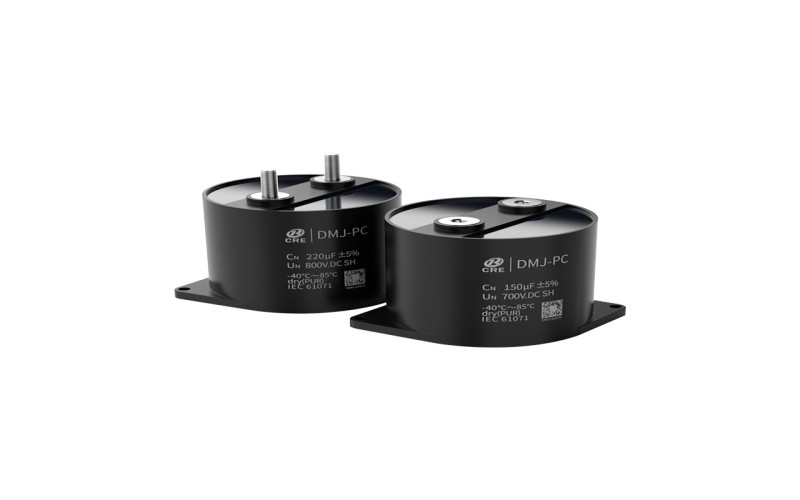
Improper capacitor selection can significantly affect the overall lifecycle cost of a PV system. When capacitors degrade prematurely due to high ESR, poor thermal management, or environmental stress, they need to be replaced more frequently. This results in increased maintenance and repair costs, which can reduce the overall return on investment (ROI) of the system.
For instance, replacing failed capacitors, especially in large-scale PV plants, can be both costly and time-consuming. Moreover, if the capacitor failure leads to inverter downtime, the lost energy production directly impacts the financial viability of the project.
By using film capacitors, which are designed to withstand longer operational lifetimes and harsh conditions, the frequency of replacements and associated maintenance costs can be drastically reduced, resulting in a more economical system over the long term.
Inverter downtime is a significant concern when capacitors fail. If a capacitor degrades or fails completely, the inverter may shut down or operate at reduced efficiency, leading to a loss of energy production. Since inverters are the heart of the PV system, any interruption in their operation can directly affect the amount of electricity generated, reducing the financial returns from solar energy production.
Given the potential for extended periods of downtime due to improper capacitor selection, PV systems may not be able to meet their expected energy generation targets. The use of more reliable components, such as film capacitors, helps reduce the likelihood of such downtimes, thereby ensuring consistent energy production and better financial returns.
When selecting capacitors for PV inverters, it is essential to consider not just initial costs but also the long-term performance and durability of the components. Film capacitors, such as those used in CRE New Energy PTE. LTD’s DMJ-PC series, offer a balance of cost, performance, and longevity. Their superior thermal management, low ESR, and high ripple current handling capability make them the optimal choice for ensuring the long-term stability and reliability of PV inverters.
Investing in high-quality film capacitors upfront can minimize future maintenance costs, reduce energy losses, and improve the overall economic performance of the PV system throughout its lifetime.
Improper selection of capacitors in photovoltaic (PV) systems can significantly impact efficiency, reliability, safety, and operational costs. Choosing the right capacitor, such as the DMJ-PC series from CRE New Energy PTE. LTD, ensures long-term reliability and performance. These film capacitors are ideal for DC-link filtering, offering stability and durability, which makes them a preferred solution for PV inverters.
A: Improper capacitor selection can lead to efficiency losses, increased maintenance costs, and system instability, especially in PV inverters. High ESR and poor thermal management may result in faster degradation and frequent failures.
A: Film capacitors offer better reliability and longer lifespan than traditional electrolytic capacitors, making them ideal for DC-link filtering in photovoltaic systems. Their low ESR and high thermal stability improve overall system efficiency.
A: Film capacitors enhance the stability of PV inverters by ensuring consistent voltage regulation and reducing ripple currents, ultimately improving system reliability and reducing downtime.


