
- All
- Product Name
- Product Keyword
- Product Model
- Product Summary
- Product Description
- Multi Field Search
Views: 0 Author: Site Editor Publish Time: 2026-03-22 Origin: Site
Film capacitors play a crucial role in power electronics, industrial drives, renewable energy, and electric vehicles, thanks to their long life and stable performance. However, even the most reliable capacitors, like those from CRE New Energy PTE. LTD, can experience damage under certain conditions. In this article, we'll explore the common causes of damage to film capacitors and discuss how to prevent these issues to ensure optimal performance and extended lifespan.
Film capacitors, though reliable and long-lasting, can suffer damage when exposed to electrical stress beyond their design limits. The key types of electrical stress that lead to capacitor failure include overvoltage, excessive ripple current, high voltage rate of change (dV/dt), and improper application. These stress factors affect the dielectric material, metallized layers, and electrical connections inside the capacitor. Understanding each type of electrical stress is crucial to avoid premature failure in power electronics applications, such as inverters, frequency converters, and renewable energy systems.
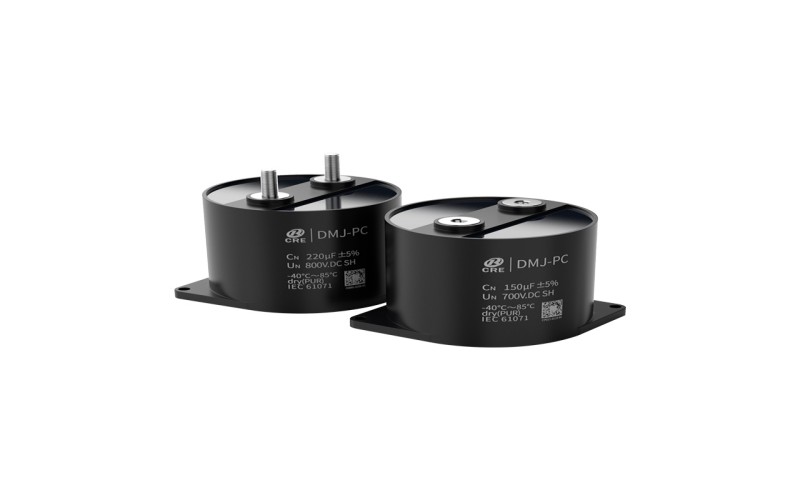
One of the most common causes of film capacitor damage is overvoltage. When the voltage applied to a capacitor exceeds its rated voltage, the electric field across the dielectric material intensifies, potentially causing the dielectric to break down. This breakdown creates a short-circuit path inside the capacitor, severely affecting its functionality.
Overvoltage can occur due to various factors, such as voltage spikes during switching events, grid fluctuations, or improper system design. Capacitors that are exposed to high voltage for extended periods may experience dielectric damage, reducing their insulation resistance and increasing leakage currents. As a result, the capacitor's performance degrades, and in some cases, it may fail completely.
In critical applications, such as DC-link circuits in power converters, ensuring that the voltage stays within safe operating limits is essential to prevent dielectric breakdown. Capacitors with high voltage resistance, such as the DMJ-PC series from CRE New Energy PTE. LTD, are designed with a robust dielectric structure to handle brief overvoltage events, reducing the likelihood of catastrophic failure.
Another major cause of film capacitor damage is excessive ripple current. Ripple current is the alternating current that flows through the capacitor, which is common in power electronic circuits like inverters, DC-link filters, and energy storage systems. As the ripple current flows through the capacitor's equivalent series resistance (ESR), heat is generated due to Joule heating. This heat can accumulate and cause thermal stress on the dielectric material.
When capacitors are subjected to high ripple currents, the heat generated can lead to several issues:
● Accelerated aging of the dielectric material: Over time, this leads to a reduction in capacitance and increased leakage currents.
● Decreased ESR performance: A capacitor’s ESR typically rises as it ages, which further increases heating and can lead to failure.
High ripple current is particularly damaging in high-frequency applications, such as in renewable energy inverters or electric vehicle (EV) power systems, where consistent performance is essential. To mitigate this issue, it's important to select capacitors with low ESR and high current handling capabilities, such as the DMJ-PC series, which features low ESR and is designed for efficient heat dissipation.
Type of Electrical Stress | Factors | Potential Consequences |
Overvoltage and Dielectric Breakdown | Voltage exceeding rated value, high electric field intensity | Dielectric breakdown, internal short-circuit, insulation failure |
Excessive Ripple Current and Heating | High ripple current, heat generation from ESR | Accelerated dielectric aging, increased leakage current, reduced capacitance |
High dV/dt and Pulse Voltage Stress | Rapid voltage changes create transient currents | Damage to electrode connections, metallization delamination or evaporation |
Incorrect Application | Using DC-rated capacitors in AC circuits or exceeding voltage limits | Internal discharge, capacitor failure |
Rapid changes in voltage, or high dV/dt, are another stress factor that can lead to film capacitor failure. In circuits with high-frequency switching, such as power electronics or motor drives, the voltage can change rapidly, generating transient currents. These transient currents can create significant stresses at the electrode connections and metallized layers inside the capacitor, potentially leading to internal arcing or short circuits.
When capacitors are exposed to high dV/dt conditions, the mechanical stress on the metalized layer can lead to delamination or evaporation of the metallization, reducing the effective surface area of the electrodes. This deterioration can cause a decrease in capacitance and, in the worst-case scenario, complete failure. Capacitors designed for high dV/dt applications, such as DC-link capacitors, must have robust metallization and electrode bonding to handle these stresses.
Using a capacitor in conditions for which it was not designed is a critical error that can lead to failure. DC-rated film capacitors should never be used in AC circuits, as the alternating voltage can create corona discharge and thermal losses, damaging the capacitor. Similarly, over-voltage conditions can arise from improper selection of capacitors with insufficient voltage ratings, leading to dielectric breakdown.
To ensure reliability, it's important to select capacitors specifically designed for the application. For example, the DMJ-PC series is designed for DC-link filtering in high-voltage applications, ensuring that it handles both continuous DC and brief overvoltage events efficiently.
Film capacitors are sensitive to external environmental conditions that can significantly impact their performance and longevity. Temperature fluctuations, humidity, and exposure to corrosive gases are common environmental stressors that can accelerate capacitor aging and lead to catastrophic failure. Understanding these environmental risks is essential to maintaining the integrity of film capacitors in demanding applications, such as renewable energy systems, industrial drives, and electric vehicle power systems.
One of the most significant environmental factors affecting film capacitors is high temperature. Capacitors are typically rated to operate within a specified temperature range, and prolonged exposure to temperatures above this range can lead to thermal aging. High temperature accelerates the breakdown of the dielectric material, reduces insulation resistance, and increases leakage current, eventually leading to capacitor failure.
In applications such as industrial frequency converters and power transmission, where capacitors may operate at higher temperatures due to continuous load or poor ventilation, the risk of thermal degradation increases. The DMJ-PC series, for example, is designed to operate in temperature ranges up to +105°C, with built-in features to help manage thermal stress and extend lifespan.
To mitigate the risk of thermal damage, it is critical to manage the capacitor's operating temperature through:
● Proper ventilation in enclosures.
● Efficient heat dissipation in power systems.
● Use of capacitors with higher temperature tolerance, like the DMJ-PC series.
Humidity can have a profound effect on film capacitors, especially in environments where moisture can penetrate the capacitor’s structure. Moisture ingress can lead to the corrosion of the metallized layer, reducing the capacitor's capacitance and increasing leakage current. In addition, high humidity levels can promote electrochemical corrosion, which can further damage the internal components and shorten the lifespan of the capacitor.
In environments like solar inverters or industrial power systems, where capacitors are exposed to varying levels of moisture, it is crucial to choose capacitors with high environmental protection ratings. The DMJ-PC series uses dry resin infusion and UL94V-0 flame retardant materials, ensuring better protection against environmental factors like moisture and corrosion.
Exposure to corrosive gases such as sulfur, chlorine, or other industrial pollutants can also damage film capacitors. These gases can attack the capacitor's metal terminals and internal wiring, leading to oxidation or degradation of electrical connections. In industries such as marine applications or chemical plants, where capacitors are exposed to harsh chemicals, selecting capacitors with better protection against corrosion is essential.
The DMJ-PC series is designed to operate in harsh environments, offering reliable performance even in challenging industrial conditions. Proper sealing and material selection ensure long-term performance and protection against corrosive environments.
Film capacitors, like all electronic components, are susceptible to mechanical and physical stresses that can impair their functionality and longevity. These stresses can arise during manufacturing, installation, or from the operational environment. Understanding and mitigating these factors is crucial to enhancing the performance and reliability of film capacitors, especially in power electronics, renewable energy applications, and industrial drives where high stability is required.
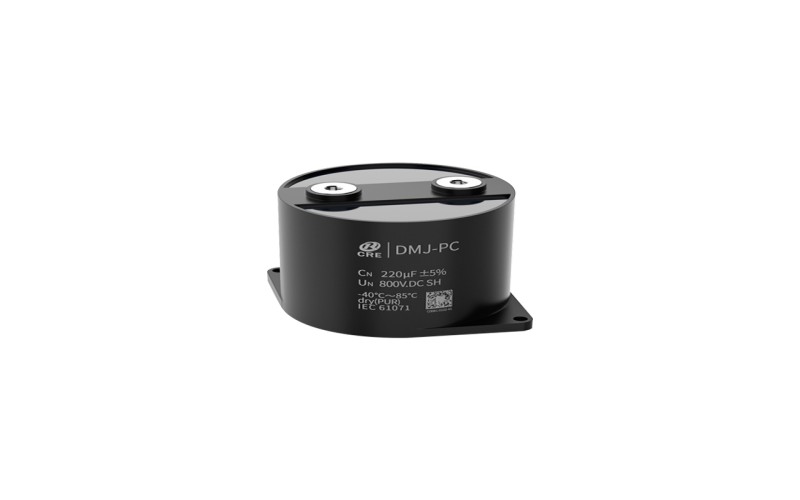
One of the most common mechanical stresses that film capacitors experience is during installation, particularly during soldering. When capacitors are soldered onto printed circuit boards (PCBs), excessive soldering temperatures or improper handling can damage internal connections, leading to poor electrical contact, reduced performance, or complete failure.
Excessive heat during soldering can cause thermal shock to the capacitor's internal structure, damaging the electrode connections or the dielectric film. This results in increased resistance, which leads to heat generation during operation, accelerating the degradation process. Furthermore, excessive heat can cause delamination between the metalized layer and the dielectric, weakening the overall structure.
Mechanical stress during installation is another concern. If the capacitor leads are bent excessively or the capacitor is subjected to strain during mounting, the internal connections may fracture or become loose, leading to intermittent or permanent failure. For example, when soldering joints are poorly made or under stress, it can lead to open circuits or short circuits, severely affecting the capacitor’s functionality.
To minimize these risks, it is essential to:
● Use appropriate soldering techniques that adhere to recommended temperature and time guidelines.
● Employ automated soldering systems to ensure precision and consistency.
● Use mechanically robust mounting solutions to reduce strain on the leads.
Vibration and mechanical shock are significant physical stresses that affect film capacitors, especially in high-vibration environments such as industrial machinery, transportation systems, or electric vehicles. Over time, these physical forces can lead to fatigue in the capacitor leads or internal structural damage.
Vibration-induced stresses can cause the leads to loosen, affecting the connection integrity. This can lead to poor electrical conductivity, overheating, and, eventually, capacitor failure. Additionally, continuous vibration can cause fatigue cracks in the soldered joints, compromising the overall reliability of the capacitor in long-term use.
In cases of mechanical shock, such as drops, impacts, or rapid movement, the internal components of the capacitor can be physically disrupted. This may cause misalignment of internal layers or damage to the metallized electrodes, leading to short circuits or open circuits.
To mitigate these risks, capacitors should be selected with vibration-resistant designs, especially when used in environments like automotive systems or high-frequency industrial equipment. Using shockproof mounting solutions, such as soft mounts or reinforced enclosures, can also reduce the risk of mechanical damage.
Preventing damage to film capacitors involves careful attention to selection, environmental management, and proper installation techniques. By following best practices in each of these areas, engineers can ensure that capacitors perform reliably and last longer in demanding applications.
The first step in reducing the risk of damage to film capacitors is to select the right type of capacitor for the specific application. Capacitors should be chosen based on:
● Voltage rating: Ensure that the capacitor is rated to handle the maximum expected voltage in the circuit. Overvoltage conditions are one of the most common causes of damage to capacitors.
● Ripple current handling: Capacitors used in power electronic circuits, especially DC-link filtering, need to be able to handle high ripple currents without generating excessive heat.
● Temperature tolerance: Choose capacitors that can withstand the operating temperature of the application. High temperatures can accelerate dielectric aging and increase the likelihood of failure.
● Mechanical robustness: If the application involves high vibrations or mechanical stresses, ensure the selected capacitor is vibration-resistant and suitable for rugged environments.
By matching the capacitor's specifications to the operational conditions, the likelihood of failure due to electrical or mechanical stresses is significantly reduced.
Proper thermal and environmental management is essential to prolong the life of film capacitors, especially in applications where they are exposed to extreme conditions. Factors such as temperature and humidity can accelerate the aging process and reduce performance.
To protect capacitors from thermal stress, ensure adequate ventilation and heat dissipation. Using capacitors with higher temperature tolerance, such as the DMJ-PC series, which is rated for temperatures up to +105°C, can help mitigate damage caused by heat. Additionally, capacitors used in high-power applications, such as renewable energy systems or electric vehicle inverters, should have built-in features that enhance heat management.
In terms of environmental protection, humidity and corrosive gases can penetrate the capacitor and affect its internal structure, leading to reduced capacitance and increased leakage. To prevent this, choose capacitors designed with protective coatings or hermetically sealed enclosures. The DMJ-PC series from CRE New Energy PTE. LTD is designed with robust encapsulation techniques that protect against moisture ingress and corrosion.
To reduce mechanical stress during installation, it is essential to follow proper mounting and soldering techniques. This includes using the correct soldering temperatures and times to avoid thermal shock, and mechanically reinforcing the capacitor to prevent strain on the leads. Automated soldering machines are typically more reliable than manual processes, ensuring consistent quality and preventing overheating.
Moreover, the use of shockproof mounting solutions, such as soft mounts or resilient enclosures, can help protect the capacitor from mechanical shocks and vibrations. Properly designed enclosures will not only shield the capacitor from external forces but also improve its thermal management by allowing better airflow.
Damage to film capacitors can arise from electrical, environmental, and mechanical factors. By understanding these causes, engineers can ensure better reliability and longer lifespan for capacitors. CRE New Energy PTE. LTD offers the DMJ-PC Cylindrical Plastic Shell Power Film Capacitor, designed to handle high stress in power electronic applications, providing stable performance and extended service life.
A: Film capacitors can be damaged by overvoltage, excessive ripple current, and environmental stress like high temperature and humidity. Understanding these factors can help prevent failure and extend their lifespan.
A: Excessive ripple current generates heat within film capacitors, which can accelerate dielectric aging and reduce capacitance, impacting overall system performance.
A: Yes, high temperature, humidity, and corrosive environments can degrade film capacitors, causing performance loss and eventual failure if not properly managed.


