
- All
- Product Name
- Product Keyword
- Product Model
- Product Summary
- Product Description
- Multi Field Search
Views: 0 Author: Site Editor Publish Time: 2026-03-16 Origin: Site
Ensuring reliable power quality is crucial in modern electrical systems. AC Filter Capacitors help stabilize voltage, reduce ripple, and suppress harmonic interference, making them essential in many applications. In this article, we will explore how to select the right AC Filter Capacitors for different equipment, considering key factors like system frequency, environmental conditions, and application-specific requirements. You’ll learn the crucial aspects to keep in mind for optimal capacitor selection across various power systems.
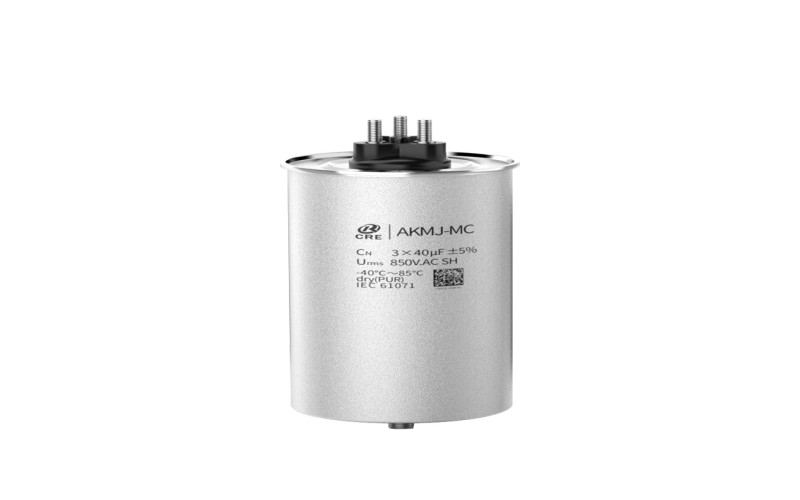
The capacitance value determines how effectively a capacitor smooths voltage ripple and filters out unwanted AC noise. In systems like inverters, UPS, and renewable energy systems, capacitance is vital for stabilizing power and ensuring smooth output.
● Load Current and Ripple Tolerance: Higher load currents and tighter ripple tolerance require capacitors with larger capacitance.
● Operating Frequency: High-frequency systems need capacitors that can effectively filter out noise at those frequencies.
The right capacitance value is essential for optimal performance, preventing excess ripple and noise.
The voltage rating of the capacitor must exceed the peak operating voltage of the AC system to avoid failure. In addition:
● Safety Margin: Engineers often apply a safety margin, usually 1.5 to 2 times the system voltage, to account for transient surges or voltage spikes.
This ensures reliability, especially in systems subject to rapid changes like inverters and UPS.
ESR (Equivalent Series Resistance) affects power loss and heat generation within the capacitor.
● ESR and Heating: Low ESR capacitors minimize heat and power loss, making them ideal for high-frequency applications like inverters.
● Ripple Current: Capacitors must handle large ripple currents in high-power systems like UPS and wind power setups.
Low ESR capacitors ensure better efficiency and longer lifespan, crucial for reliable power delivery.
The dielectric material affects a capacitor's stability and performance.
● Polypropylene Film Capacitors: Widely used due to their low ESR, self-healing, and high stability properties, ideal for inverters and UPS systems.
● Self-Healing: This feature allows capacitors to recover from minor breakdowns, ensuring long-term reliability.
CRE New Energy PTE. LTD utilizes metallized polypropylene film in its capacitors, providing excellent filtering performance and durability in demanding applications.
Table: Dielectric Materials and Their Applications
Dielectric Material | Key Features | Best Use |
Polypropylene Film | Low ESR, self-healing, stable | Inverters, UPS, renewable energy systems |
Aluminum Oxide | High voltage tolerance, compact | Industrial and high-power applications |
Inverters are essential for converting DC power into AC in renewable energy systems and backup power setups. However, inverters operate with high switching frequencies and rapid voltage transitions, which can lead to electrical noise and harmonic distortion. AC filter capacitors help mitigate these issues:
● High Switching Frequencies and Voltage Transitions: Inverter circuits, typically operating at kHz to MHz frequencies, generate high-frequency noise during voltage transitions. Capacitors filter out this noise, ensuring stable power output.
● Reducing Harmonic Distortion: The high switching frequency in inverters can introduce harmonic distortion, affecting the quality of the AC output. Capacitors smooth the waveform, ensuring clean and stable power, which is especially critical in solar and wind turbine systems.
Low ESR capacitors with the ability to handle high ripple currents are ideal for inverters, preventing overheating and ensuring efficient performance.
Renewable energy systems, like wind power and photovoltaic (solar), rely on power converters to connect to the grid or standalone systems. These converters can introduce switching noise and harmonic distortion, requiring AC filter capacitors to address these challenges:
● Switching Noise and Harmonics: The DC to AC conversion in these systems produces high-frequency switching noise. Without proper filtering, this can lead to inefficiencies and damage to sensitive electronics.
● Stabilizing Grid-Connected Converters: AC filter capacitors stabilize the output from converters, ensuring smooth power fed into the grid and protecting sensitive components from voltage spikes.
Capacitors with high voltage endurance and self-healing properties are essential in renewable energy setups to prevent failures caused by transient voltage spikes.
UPS systems provide stable power during outages, with AC filter capacitors playing a key role in stabilizing voltage and reducing distortion:
● Stable Output During Power Switching: Capacitors smooth voltage fluctuations and transients during power source switching, ensuring consistent power supply.
● Reducing Ripple and Harmonic Distortion: Capacitors help reduce ripple and harmonic distortion in high-power AC circuits found in UPS systems, ensuring clean and reliable output.
For UPS systems, capacitors must handle high ripple currents efficiently without overheating, with low ESR and high pulse current handling to ensure long-term reliability.
Industrial applications often involve complex AC circuits powering machinery and automation systems. AC filter capacitors are essential for improving power quality and equipment stability:
● EMI Suppression: Capacitors reduce electromagnetic interference (EMI) generated by large motors and machinery, preventing disruption to other systems.
● Power Quality Improvement: Capacitors stabilize voltage by filtering out spikes, transients, and ripple currents, improving power quality and extending equipment life.
Capacitors used in industrial circuits must be durable and capable of handling high voltage and current fluctuations, ensuring stable operation in challenging environments.
Table: AC Filter Capacitor Features for Different Applications
Application Type | Key Features of Capacitors | Key Benefits |
Inverter Systems | Low ESR, high ripple current, self-healing | Reduces harmonic distortion, stabilizes output power |
Wind Power & Photovoltaic | High voltage endurance, self-healing, low ESR | Stabilizes power converters, protects semiconductors |
UPS Systems | High ripple current capacity, low ESR, high pulse current handling | Smoothes power transitions, ensures stable backup power |
Industrial AC Circuits | EMI suppression, wide temperature range, durable | Enhances equipment stability, reduces malfunctions |
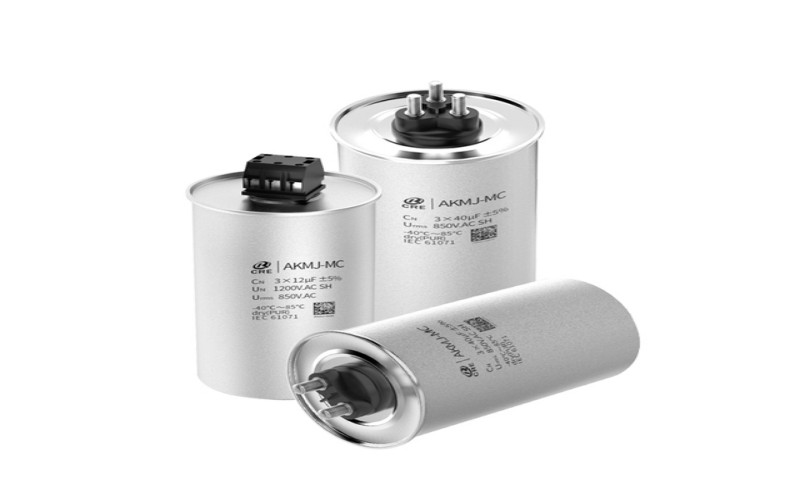
AC filter capacitors used in industrial or outdoor environments must be designed to withstand a wide range of temperatures and environmental conditions. These factors directly affect the capacitor's performance, longevity, and overall reliability in real-world applications.
● Wide Temperature Range: Capacitors intended for use in industrial environments or outdoor settings, such as wind power and photovoltaic systems, need to perform efficiently across a broad temperature spectrum. Extreme temperatures, ranging from -40°C in colder climates to 105°C in hot industrial areas, require capacitors that can maintain stable performance without degradation.
● Harsh Environmental Conditions: In renewable energy systems, such as wind turbines and solar power installations, components are often exposed to varying environmental factors such as humidity, dust, and UV radiation. Capacitors designed for these conditions must have robust encapsulation and durable materials that protect them from environmental damage. CRE New Energy PTE. LTD capacitors, for instance, are built with enhanced durability to ensure long-term stability in these challenging environments.
Capacitors that cannot withstand harsh temperatures or environmental factors may experience a decrease in performance, leading to premature failures. This is especially critical for applications like photovoltaic systems where long operational lifetimes are expected, and any component failure can disrupt energy production.
A key feature of film capacitors, particularly those used in AC filtering applications, is self-healing technology. This capability significantly enhances the reliability and longevity of capacitors, making them suitable for demanding power systems.
● Recovering from Localized Dielectric Breakdown: In high-voltage systems, such as those found in inverters or renewable energy systems, small dielectric breakdowns can occur due to transient voltage spikes. Capacitors with self-healing properties can recover from these breakdowns by isolating the affected area within the dielectric material, preventing further damage to the capacitor and the system.
● Improved Reliability: The self-healing feature allows capacitors to continue functioning even after minor failures, which is particularly valuable in high-voltage AC filtering applications. In environments like wind power or photovoltaic installations, where consistent and reliable operation is essential, self-healing capacitors help ensure the long-term stability of power electronics systems.
Self-healing technology minimizes the risk of complete capacitor failure, providing a safeguard against transient voltages that could otherwise damage the capacitor and surrounding components.
When selecting AC filter capacitors, ensuring compliance with international safety and performance standards is vital for system reliability and safety. Capacitors must meet regulatory requirements to function safely and effectively in various applications.
● Safety and Performance Standards: AC filter capacitors should comply with standards such as IEC (International Electrotechnical Commission), GB (Chinese National Standards), and UL (Underwriters Laboratories) to ensure they meet global safety, performance, and environmental criteria. These standards cover a wide range of factors, including insulation strength, dielectric properties, and resistance to environmental stresses.
● CRE New Energy PTE. LTD’s Compliance: CRE New Energy PTE. LTD designs capacitors that adhere to these rigorous standards, ensuring that their AC filter capacitors perform consistently and safely across diverse applications, including inverters, UPS systems, and renewable energy installations.
Compliance with these standards guarantees that the capacitors will maintain their performance over time, even in demanding environments, and that they meet the necessary safety requirements for industrial and energy-related applications.
When selecting AC filter capacitors, one of the most critical factors to consider is the system's frequency characteristics. The ability of a capacitor to filter out unwanted signals and maintain clean power depends largely on the frequency at which the system operates.
● System Frequency: In high-frequency applications, such as inverters or UPS systems, the capacitors need to efficiently filter out high-frequency noise generated by switching devices. The frequency of operation directly impacts the capacitor's effectiveness. Capacitors with higher capacitance are typically required to suppress low-frequency noise, while those used in high-frequency systems must have the ability to filter out rapidly changing signals.
● Harmonic Frequencies: Harmonics are additional frequencies generated when switching devices in inverters or other power electronics systems disrupt the normal AC waveform. These harmonic frequencies can cause significant performance issues and degrade the overall power quality. Capacitors designed for inverter and renewable energy systems must be able to handle these harmonics and filter them efficiently to prevent damage to sensitive components.
The selection of a capacitor should consider both the fundamental frequency of the circuit and the harmonics produced by the switching devices, ensuring that the capacitor can provide effective filtering across the entire frequency spectrum.
In real-world applications, the selection of AC filter capacitors must balance performance, size, and installation considerations. These factors are essential for ensuring that the capacitor integrates seamlessly into the system while still meeting the required electrical specifications.
● Capacitor Size and Available Space: The physical size of the capacitor is a crucial design consideration, particularly in compact systems like UPS and inverters. Capacitors with higher capacitance often require larger physical sizes. However, the available space for installation may be limited, especially in systems that are designed to be compact or energy-efficient. Therefore, capacitor designs must prioritize both electrical and spatial efficiency, ensuring the capacitor fits within the system's constraints without compromising performance.
● Mounting Configuration: The way the capacitor is mounted within the system is another important factor. Mounting configurations can vary based on the system's layout and the type of AC circuits in use. Capacitors must be installed in a way that minimizes the risk of overheating, reduces mechanical stress, and ensures proper electrical connection. In applications like industrial AC circuits, it is also important to consider the installation environment (such as temperature, vibration, and humidity) and select capacitors with the appropriate mounting and sealing designs to withstand harsh conditions.
The longevity and reliability of AC filter capacitors are vital, particularly in systems that operate continuously or under heavy loads, such as inverters, UPS, and renewable energy applications. Properly selecting capacitors for long-term operation helps minimize maintenance and reduces the likelihood of downtime.
● Long Operational Life: In power electronics systems like UPS and inverters, capacitors often function for extended periods without interruption. As a result, selecting capacitors designed for long operational life is essential. Capacitors with higher endurance, such as those with low ESR and self-healing properties, ensure that the system maintains stable performance over time without frequent failures.
● Maintenance and Downtime: Continuous operation can stress capacitors, especially in environments where high ripple currents or temperature variations are common. Selecting capacitors designed for minimal wear and tear, such as low ESR capacitors, reduces the need for frequent maintenance and system downtime. For renewable energy systems, where reliability is critical for maintaining power generation, ensuring that capacitors can withstand the stresses of long-term use is essential for system efficiency and cost-effectiveness.
Incorporating capacitors with extended lifespans and high reliability into the system design minimizes long-term costs and maximizes the efficiency of critical systems like inverters and industrial equipment.
Selecting the right AC Filter Capacitors involves evaluating electrical parameters like capacitance, voltage rating, ESR, and dielectric material, all of which impact performance and reliability. In systems such as inverters, UPS, wind power, photovoltaic, and industrial ac circuits, these capacitors ensure stable power and optimal equipment operation. CRE New Energy PTE. LTD offers capacitors with unique advantages, including high durability and low ESR, providing valuable solutions for various power applications.
A: AC Filter Capacitors are used to stabilize voltage, reduce ripple, and filter out harmonic noise in AC power systems, ensuring smooth and reliable performance in equipment like inverters, UPS, and renewable energy systems.
A: When selecting AC Filter Capacitors, consider factors like capacitance value, voltage rating, ESR, and environmental conditions to match the requirements of your equipment, such as inverters or industrial AC circuits.
A: ESR (Equivalent Series Resistance) affects the capacitor's efficiency and heat generation. Low ESR is crucial for AC Filter Capacitors in high-frequency and high-power applications, like inverters and UPS systems, to ensure stable operation and minimize power loss.


